Essential Customs Documentation and Preparation Checklist
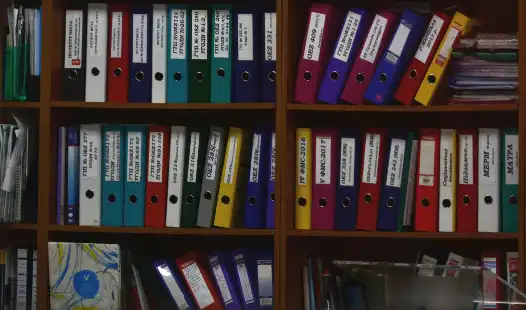
To make sure the China customs clearance process goes smoothly, it's important to have a full list of all the paperwork and plans that are needed. This speeds up the process of getting clearance and lowers the chance of being held up or turned down at the border. For your convenience, here is a longer list to help you get ready:
Needs for Import Licenses and Permits
For some things to come into China, they may need special import licenses or permits. It's important to do study and get these papers ahead of time. This could mean:
- Automatic Import License: This is needed to keep track of certain things statistically.
- A quarantine inspection permit: Needed for plants, animals, and their goods.
- China Compulsory Certification (CCC): Some goods must have this to meet quality and safety standards.
Documentation specific to the product
Depending on what you're shipping, you may need to provide extra paperwork:
- Material Safety Data Sheets (MSDS): These are used for poisons and other dangerous substances.
- Health certificates: For medicines and food items.
- IPR documentation: Be used to show that someone owns or has permission to use certain trademarks or patents.
Registration and Declarations for Customs
Make sure you've filled out all the necessary forms and declarations:
- Customs Registration: Get a registration number for your business from Chinese customs.
- Advance Manifest: Send information about the goods before it arrives so that the risk can be evaluated.
- Customs Declaration Form: Fill out the legal form correctly and fill in all the necessary information.
Documentation about money
Get the financial paperwork ready to back up your shipment:
- Foreign Exchange Declaration Form: This is used for dealing with foreign cash.
- Proof of Payment: Proof that the things being imported have been paid for.
Documents for Logistics and Transportation
Make sure that all papers related to transportation are in order:
- Freight Insurance Certificate: This is proof that the package is covered by insurance.
- Delivery Order: Allows the things to be sent to the recipient.
Documents for Quality Control and Compliance
Get papers ready that show you're following Chinese rules:
- Quality Control Reports: These show the results of any quality checks or tests done before the shipment.
- Compliance Certificates: Proof that goods are safe and up to Chinese standards for quality and safety.
You can make your China Logistics Solutions and customs clearance process much more efficient by carefully preparing these papers and following this checklist. Remember that careful planning and attention to detail are the keys to a good international shipping trip.
What are the common reasons for customs delays or seizures?
Being aware of the potential pitfalls of the China customs clearance process might help you avoid costly delays and even detention. Many things can go wrong at the border, and your China Logistics Solutions would be affected. Reasons that typically lead to customs delays or searches are:
Misleading or Missing Records
Paperwork that is either incomplete or incorrect is a common cause of customs delays. Invoices, packing lists, and bills of lading for businesses are susceptible to error. Any inaccuracy or missing information on the part of customs personnel reviewing the documentation could result in significant delays. Fill out all fields completely, accurately, and consistently.
Prohibited or Restricted Items
If you try to bring in illegal or restricted things without the right permits, they could be taken away right away. China keeps a list of things that can't be brought into the country or need special permissions to do so. Before sending, it's important to learn all about these rules and follow them.
Items Not Being Valued Enough
The customs officials are very careful about the values that are given for things that are brought in. Undervaluation can cause delays, fines, or seizures, whether it's done on purpose or by chance. Always be honest about how much your things are worth and back up your claim with proof.
Do not have the right licenses or permits
In order to come into China, some goods need special import licenses or permits. If you don't get these ahead of time, your shipments could be held up at customs or even refused completely. Always know what the latest rules are for the goods you sell.
Breaking of intellectual property rights
China has made it easier for people to protect their intellectual property rights. Goods that might be breaking logos, patents, or copyrights can be held or taken away. For all protected or trademarked goods, make sure you have the right permissions or rights.
How to correctly classify goods and calculate import duties and VAT?
For China Logistics Solutions to work, it's important that things are correctly classified and that import duties and VAT are calculated correctly. Correct labeling not only helps with figuring out the right tariff rates but also makes sure that customs rules are followed. Here's how to deal with this tricky part of foreign trade:
How the Harmonized System (HS) Code Works
The Harmonized System (HS) is how China sorts its goods. Products that are traded are put into groups using this international standard method of names and numbers. It is very important to get the HS code for your goods right because that determines the tariff rates that apply and any other requirements that may be needed.
How to Figure Out Import Duties
In China, import taxes are usually based on the goods' CIF value, which stands for "Cost, Insurance, and Freight." Different types of goods have different tax rates, which can be anywhere from 0% to over 100%. To figure out the import tax:
1. Figure out your product's HS code.
2. Look up the tax rate that goes with it in China's customs tariff schedule.
3. Multiply the rate by the things' CIF value.
Value-Added Tax (VAT) Calculation
In addition to import duties, most goods imported into China are subject to VAT. The standard VAT rate is 13%, with some goods eligible for a reduced rate of 9%. The VAT is calculated on the sum of the CIF value, import duty, and consumption tax (if applicable). The formula is:
VAT = (CIF value + Import Duty + Consumption Tax) × VAT rate
Working with Freight Forwarders and Customs Brokers
International shipping and clearing customs in China are often very complicated and need professional help. Freight forwarders and customs agents are very important to making China Logistics Solutions run smoothly. Here's how to work with these workers well:
How to Pick the Right Partner
It is very important to find a freight forwarder or customs broker with a good reputation and knowledge in doing business with China. It's best to work with people who have a lot of experience managing shipments to China, who know a lot about Chinese customs rules, who offer a wide range of services like paperwork preparation and customs clearance, and who keep communication open and honest throughout the whole process.
Taking Advantage of Their Knowledge
Experienced freight forwarders and customs brokers can give you useful information and services, such as pre-clearance consultations to find potential problems, help with correctly classifying goods and figuring out duties, representation when dealing with customs authorities, and tips on how to make your supply chain work best for the Chinese market.
Making sure there is clear communication
For China logistics solutions to work, you need to be able to work well with your shipping partners. To make sure this happens, you should give complete and correct details about your packages, keep track of the progress of your items during the shipping and clearance process, and quickly handle any problems or inquiries to avoid delays.
Conclusion
To get through the complicated processes of foreign shipping and clearing customs in China, you need to plan ahead, pay close attention to details, and be an expert. Businesses can make their China Logistics Solutions much more efficient by knowing what paperwork they need, planning ahead, and working with professionals with a lot of experience. Remember that bringing things into China legally depends on following the rules, correctly labeling the items, and managing the customs process well. Keeping up with the latest customs rules and procedures is important for staying ahead in foreign trade, especially as the Chinese market changes all the time.
FAQ
1. What is the average time through Chinese customs?
A: China's customs clearance time varies on the type of products, how full the documentation is, and how busy the port of entry is. A simple shipment with all the paperwork usually clears in three to five business days. Complex instances that require more checks may take longer.
2. Is there anything exceptional about exporting stuff from the internet to China?
A: China-bound e-commerce goods may be subject to CBEC laws. These rules may differ from normal trade in steps and taxes. Online businesses should know CBEC guidelines. Product limitations, transaction values, and bonded warehouses to facilitate clearing are among these rules.
3. How can I track my item through customs?
A: Most freight forwarders and customs brokers offer online tracking to monitor your shipment's progress through customs. Your customs declaration number can be used to track your declaration on the China Customs website's public query system.
Streamline Your China Market Entry with China Entry Hub
Navigating the complexities of China Logistics Solutions and customs clearance doesn't have to be a daunting task. At China Entry Hub, we specialize in simplifying your journey into the Chinese market. Our team of experts provides end-to-end support, ensuring smooth customs clearance and efficient logistics management. With our deep understanding of local regulations and extensive network of trusted partners, we can help you avoid common pitfalls and optimize your supply chain for success in China. Don't let customs challenges hinder your business growth. Contact China Entry Hub today at info@chinaentryhub.com to discover how we can transform your China market entry strategy and drive your success in this dynamic market.
References
- China Customs and Trade Regulations Handbook, International Business Publications, USA, 2019 Edition.
- Zhang, L. et al., "Customs Clearance Optimization in China: A Case Study Approach," Journal of International Logistics and Trade, Vol. 18, No. 2, 2020.
- World Customs Organization, "Doing Business in China: A Guide to Import and Export Procedures," 2021 Edition.
- Liu, X., "E-commerce and Cross-border Logistics in China: Challenges and Opportunities," International Journal of Logistics Research and Applications, Vol. 24, Issue 3, 2021.
- General Administration of Customs of the People's Republic of China, "Customs Clearance Guidelines for International Trade," 2022.
- Wang, Y. and Li, H., "Navigating China's Customs Landscape: Strategies for Efficient Clearance," Asia Pacific Journal of Marketing and Logistics, Vol. 33, Issue 4, 2021.