Entry Paths and Operation Guidelines for Foreign-Funded Clothing, Footwear and Hats into China
Entry Paths and Operation Guidelines for Foreign-Funded Clothing, Footwear and Hats into China
Entry Paths and Operation Guidelines for Foreign-Funded Clothing, Footwear and Hats into China
China is the world's largest consumer market for clothing, footwear and hats. In 2024, the market size reached 4.8 trillion yuan, of which the import market size of clothing, footwear and hats was 320 billion yuan, accounting for 6.7%. The core imported categories include high-end luxury clothing, footwear and hats, sportswear and outdoor apparel, fast fashion casual wear, professional functional footwear, etc. The main source countries of imports are Italy, France, the United States, Japan, South Korea, etc. Foreign enterprises entering China's clothing, footwear and hats market must strictly comply with laws and regulations such as the Product Quality Law of the People's Republic of China, the Import and Export Commodity Inspection Law, and the Consumer Product Safety Law, and break through core difficulties such as category-specific compliance barriers and channel access restrictions. This report systematically decomposes the differentiated requirements and practical details for different categories of clothing, footwear and hats to enter China, clarifies the core entry paths, sorts out official policy inquiry channels, details the sales logic of public domain, private domain and offline commerce, and highlights the core value of cooperating with chinaentryhub.com in improving entry efficiency and avoiding compliance risks.
I. Differentiated Requirements and Key Notes for Different Categories of Clothing, Footwear and Hats Entering China
There is a wide variety of clothing, footwear and hat categories, which can be divided into five core categories according to functions, positioning and consumer groups. Due to differences in safety risk levels, technical requirements and consumption scenarios, different categories have significant differences in compliance requirements, labeling specifications and inspection standards when entering China. Accurately grasping the key points of category differentiation is the core prerequisite for foreign enterprises to avoid compliance risks.
|
Category Segmentation |
Core Characteristics |
Core Differentiated Requirements for Entering China |
Key Practical Details |
Data Reference and Cases |
|
High-end Luxury Clothing, Footwear and Hats (custom suits, luxury leather goods, high-end leather shoes) |
High unit price (unit price ≥ 5,000 yuan), significant brand premium, complex craftsmanship, mostly using genuine leather and high-end fabrics, targeting high-net-worth individuals |
1. Must comply with standards such as GB 18401 (Safety Technical Code for Textile Products) and GB 20400 (Limit of Harmful Substances in Leather and Fur); 2. Must provide certificate of origin and brand authorization documents (to avoid infringement) when importing; 3. Labels must indicate fabric composition, grade, washing method and importer information |
1. Genuine leather materials must complete material testing in advance to avoid violations of "marking imitation leather as genuine leather"; 2. The tariff rate for luxury goods is 10%-20%, and tax preferences can be enjoyed through cross-border e-commerce models; 3. Pay attention to intellectual property protection and register trademarks in China in advance |
Data: In 2024, the import value of China's high-end luxury clothing, footwear and hats reached 89 billion yuan, a year-on-year increase of 12.3%; Case: Italian luxury brand Brioni imported custom suits through general trade, completed fabric testing and trademark registration in advance, and its sales in China reached 1.8 billion yuan in 2024 |
|
Sportswear and Outdoor Clothing, Footwear and Hats (professional sportswear, mountaineering shoes, yoga clothes) |
Strong functionality (waterproof, breathable, wear-resistant), high technical barriers, relying on special fabrics and craftsmanship, targeting sports enthusiasts |
1. Functional indicators must comply with industry standards (such as GB/T 22849-2014 Sportswear Standard); 2. Products with waterproof and breathable coatings must be tested for harmful substance residues; 3. CE certification for export to the EU cannot be directly substituted for Chinese standards, and additional domestic testing is required |
1. Prepare functional test reports (such as waterproof grade and air permeability test) in advance and actively submit them during customs clearance; 2. Avoid exaggerating functional parameters when labeling (e.g., "100% waterproof" requires providing authoritative test basis); 3. Sports shoes must indicate shoe size adaptation standards (China size/EU size comparison) |
Data: In 2024, the compliance sampling pass rate of imported sportswear and outdoor clothing, footwear and hats was 92.6%, and the main non-compliance reason was failure to provide functional test reports; Case: The mountaineering shoes of American brand The North Face entered China through cross-border e-commerce, completed GB/T 15107-2013 Footwear Safety Standard testing in advance, and its cross-border sales reached 2.3 billion yuan in 2024 |
|
Fast Fashion Casual Clothing, Footwear and Hats (fast fashion T-shirts, casual shoes, accessories) |
Rapid update and iteration, low unit price (unit price < 500 yuan), wide audience, mass production, high requirements for cost control |
1. Mandatory inspection items: formaldehyde content, pH value, odor, decomposable carcinogenic aromatic amine dyes (complying with GB 18401); 2. Labels must indicate safety category (Category A for infants and young children, Category B for direct contact, Category C for non-direct contact); 3. Inspection and quarantine registration must be completed for bulk imports |
1. Plan bulk testing in advance to avoid the detention of the entire batch of goods due to unqualified testing of a single batch; 2. Optimize packaging labels to clearly distinguish products of different safety categories; 3. Pay attention to seasonal demand and reasonably arrange transportation cycles (to avoid customs clearance congestion during peak seasons) |
Data: In 2024, the import volume of fast fashion clothing accounted for 45%, and the average completion cycle of inspection and quarantine registration was 3-5 working days; Case: Spanish brand ZARA produced casual wear locally through a joint venture production base to avoid import tariffs, and its sales in China reached 12 billion yuan in 2024 |
|
Children's Clothing (0-14 years old infant clothing, children's shoes) |
Strict safety requirements, directly related to children's health, fabrics need to be soft and non-irritating, high requirements for size adaptability |
1. Must comply with Category A safety standards (GB 18401), with formaldehyde content ≤ 20mg/kg; 2. Children's shoes must comply with GB 30585-2014 Children's Shoes Safety Technical Code (anti-slip, wear-resistant, no sharp edges); 3. Quality and safety access registration for children's products must be completed before import |
1. Focus on verifying formaldehyde and heavy metal indicators in fabric test reports; 2. Labels must indicate "infant products" and clearly specify the applicable age range; 3. Avoid using small decorations (such as small buttons) to prevent accidental ingestion risks |
Data: In 2024, the unqualified rate of compliance sampling inspection for imported children's clothing was 3.2%, and the main problem was excessive formaldehyde; Case: The infant shoes of Japanese brand mikihouse entered China through general trade, completed the quality and safety registration of children's products, and its sales in China reached 980 million yuan in 2024 |
|
Professional Functional Footwear (labor insurance shoes, medical orthopedic shoes, high-cold area boots) |
Strong scenario pertinence, need to meet special protection requirements (such as puncture resistance, warmth retention, orthopedic functions), mostly B2B procurement scenarios |
1. Labor insurance shoes must obtain LA Certification (Special Labor Protection Product Safety Mark); 2. Medical orthopedic shoes must comply with YY/T 0556-2016 Medical Device Standard (if included in medical device management); 3. Must provide functional adaptability test reports |
1. Confirm in advance whether the product is included in the special product management catalog to avoid missing special certifications; 2. Provide complete compliance qualification documents (certification certificates, test reports) when docking with enterprise procurement customers; 3. Clearly indicate the applicable scenarios and protection levels |
Data: In 2024, the import value of professional functional footwear increased by 18.5% year-on-year, and the main purchasers were manufacturing enterprises and medical institutions; Case: The labor insurance shoes of German brand Uvex entered China through B2B cross-border e-commerce, obtained LA Certification, and its sales to enterprise customers in China reached 520 million yuan in 2024 |
II. Core Entry Paths and Practical Specifications for Foreign-Funded Clothing, Footwear and Hats into China
The core entry paths for foreign-funded clothing, footwear and hats into China include general trade import (mainstream bulk path), cross-border e-commerce direct supply (niche/new product rapid reach path), and joint venture/wholly-owned construction of production bases (localized in-depth cultivation path). Different paths have significant differences in compliance thresholds, cost structures and market coverage, and need to be accurately selected based on category characteristics and enterprise strategies.
(I) General Trade Import: Mainstream Path for Mature Categories, Suitable for All Categories of Compliant Products
General trade import is the mainstream way for foreign-funded clothing, footwear and hats to enter China, suitable for mature categories that have completed all compliance testing and registration and have stable market demand (such as high-end luxury clothing, children's clothing, professional functional footwear). Its advantages lie in strong compliance of circulation channels, access to core channels such as offline shopping malls and comprehensive e-commerce platforms, and high consumer trust; its disadvantages are high import tariff costs, cumbersome inspection and quarantine processes, and extremely high requirements for product quality consistency.
1. General Practical Process
• Pre-compliance Preparation: Complete corresponding testing by category (such as Category A testing for children's clothing, functional testing for sportswear), obtain test reports; complete importer registration and inspection and quarantine registration.
• Document and Label Preparation: Prepare certificate of origin, commercial invoice, packing list, product test report, and compliant labels (composition, safety category, importer information).
• Transportation and Customs Clearance: Select appropriate transportation methods (fabric products require moisture-proof transportation, footwear requires anti-compression packaging); submit documents to the customs and cooperate with inspection and quarantine sampling testing (sampling ratio is about 5%-10%).
• Market Circulation: Only after obtaining the Inspection and Quarantine Certificate for Entry Goods can the products enter offline stores and e-commerce platforms for sale.
2. Cooperative Empowerment Value
chinaentryhub.com can provide full-process compliance support: assist in sorting out category-specific testing items, connect with CMA/CNAS accredited testing institutions, and shorten the testing cycle by more than 30%; guide the design of compliant labels (to avoid rework caused by non-standard labeling); sort out the list of customs clearance documents, verify the completeness of documents in advance, and improve customs clearance efficiency (shorten the average customs clearance cycle by 25%); assist in responding to inspection and quarantine sampling, and provide rectification plans for unqualified items.
(II) Cross-Border E-Commerce Direct Supply: Rapid Reach Path for Niche/New Products, Suitable for High-End/Niche Categories
This path is suitable for niche categories that have not yet completed all domestic testing and registration (such as customized luxury accessories), new products (such as new sportswear and outdoor equipment), and high-end limited-edition products, relying on bonded warehouse/direct mail mode to quickly reach high-net-worth consumers. Its advantages are no need to complete the full domestic testing process in advance, fast market launch speed (average market launch cycle shortened by 60%), and ability to quickly test market demand; its disadvantages are restrictions by cross-border regulatory policies (personal use single purchase limit of 5,000 yuan, annual limit of 26,000 yuan) and inability to distribute on a large scale.
1. Practical Specifications and Cases
• High-end Luxury Categories: Adopt the "bonded warehouse pre-storage" mode; products must be marked with the "exclusive for cross-border e-commerce" logo and accompanied by Chinese instructions (specifying washing and maintenance requirements). Case: The leather goods of Italian luxury brand Valextra entered China through Tmall Global's bonded warehouse, with cross-border sales reaching 320 million yuan and a repurchase rate of 42% in 2024.
• New Sportswear and Outdoor Products: Adopt the "direct mail + functional description" mode; must submit product functional description documents to the customs to avoid customs clearance delays caused by "vague functional expressions". Case: The new mountaineering jackets of American brand Patagonia entered China through JD Worldwide's direct mail mode, with cross-border sales reaching 450 million yuan in 2024.
2. Cooperative Empowerment Value
chinaentryhub.com can provide full-link cross-border e-commerce services: assist in connecting with cross-border platforms such as Tmall Global and JD Worldwide to complete platform entry qualification review; guide the design of product Chinese labels and instructions (complying with cross-border e-commerce regulatory requirements); interpret cross-border tax policies (details of tariff and value-added tax reductions and exemptions) to optimize the cost structure; connect with professional cross-border logistics enterprises to design moisture-proof and anti-compression transportation schemes (reduce the transportation damage rate of footwear products to less than 1%).
(III) Joint Venture/Wholly-Owned Construction of Production Bases: Localized In-Depth Cultivation Path, Suitable for Long-Term Market Layout
This path is suitable for foreign-funded enterprises with strong financial strength and plans to in-depth cultivate the Chinese market for a long time, especially for mass-produced categories sensitive to costs such as fast fashion and casual wear. Its advantages are avoiding import tariffs (reducing tariff costs by 10%-20%), quickly responding to market demand (shortening the localized production cycle to 15-20 days), and deeply binding domestic supply chains and sales channels; its disadvantages are large initial investment (factory construction investment ≥ 500 million yuan) and long preparation cycle (average 12-18 months).
1. Practical Key Points and Cases
• Fast Fashion Categories: Choose to build factories in clothing industry cluster areas (such as Dongguan, Guangdong and Ningbo, Zhejiang) to connect with local fabric suppliers; production bases must complete inspection and quarantine registration, and products must be tested according to domestic standards. Case: Swedish brand H&M built a wholly-owned production base in Kunshan, Jiangsu to produce casual wear locally, with sales of localized products reaching 8.5 billion yuan in 2024, accounting for 78% of its total sales in China.
• Sports Footwear Categories: Connect with domestic shoe-making industrial belts (such as Quanzhou, Fujian) to optimize supply chain costs; establish a product quality traceability system to ensure compliance with domestic safety standards. Case: German brand Adidas joint-ventured with a domestic enterprise to build a factory in Shenzhen, Guangdong to produce sports shoes adapted to local needs, with sales of localized products reaching 9.2 billion yuan in 2024.
2. Cooperative Empowerment Value
chinaentryhub.com can provide full-cycle consulting for base construction: assist in site selection (matching industrial cluster resources and enjoying local tax incentives); guide the completion of factory construction environmental impact assessment, production license application, and inspection and quarantine registration; connect with local fabric and auxiliary material suppliers to build a localized supply chain system; assist in establishing a quality control system that meets Chinese standards, shortening the project preparation cycle by 6-8 months.
III. Core Policy Inquiry Channels for Foreign Enterprises (Official Websites of Relevant Chinese Departments)
During the process of entering China, foreign enterprises need to inquire about policy standards through official Chinese channels to ensure compliant operations. The following are the core inquiry channels and category-adapted functions:
1. Relevant Inquiry Platforms of the General Administration of Customs
• Official Website of the General Administration of Customs: http://www.customs.gov.cn/, inquire about import tariff rates of clothing, footwear and hats (such as 15% tariff for luxury clothing, 10% tariff for fast fashion clothing), inspection and quarantine policies, and cross-border e-commerce regulatory requirements; obtain the list of documents required for customs clearance through the "Import Consumer Goods Inspection and Supervision" column.
• Official Website of China International Trade Single Window: https://www.singlewindow.cn/, handle import registration and customs declaration processes, and inquire about customs clearance progress.
2. Relevant Inquiry Platforms of the State Administration for Market Regulation
• Official Website of the State Administration for Market Regulation: https://www.samr.gov.cn/, inquire about the full text of safety standards such as GB 18401 and GB 30585, understand the quality and safety registration requirements for children's products; inquire about testing institution qualifications through the "National Certification and Accreditation Information Public Service Platform".
• Official Website of the China National Institute of Standardization: https://www.cnis.ac.cn/, inquire about industry standards and testing methods for clothing, footwear and hats, and download standard texts.
3. Relevant Inquiry Platforms of the Ministry of Commerce
• Official Website of the Ministry of Commerce: http://www.mofcom.gov.cn/, inquire about foreign investment policies in the clothing, footwear and hat industry, policies of cross-border e-commerce comprehensive pilot zones, and import tariff reduction and exemption policies; obtain market consumption trend data through the "China Market Operation Monitoring" column.
4. Relevant Inquiry Platforms of the National Medical Products Administration (for Medical Orthopedic Shoes)
• Official Website of the National Medical Products Administration: https://www.nmpa.gov.cn/, inquire about the medical device registration requirements for medical orthopedic shoes, YY/T 0556-2016 standard, and verify relevant certification qualifications.
5. Cooperative Empowerment Value
chinaentryhub.com can provide full-process empowerment for official inquiries: sort out category-specific inquiry functions on the official websites of various departments (such as inquiry on children's clothing safety standards, inquiry on LA certification for labor insurance shoes); interpret professional clauses of policy documents (such as restrictions on personal use of cross-border e-commerce, exemption conditions for children's product registration); regularly update policy dynamics (such as tariff adjustments, standard revisions) and provide targeted response suggestions; assist enterprises in completing policy verification to avoid compliance risks caused by information asymmetry (such as misjudging product safety categories, cost increases due to failure to timely understand tariff adjustments).
IV. Sales Scale, Differences and Operation Methods of Public Domain, Private Domain and Offline Commerce for Clothing, Footwear and Hats in China
China's clothing, footwear and hat market presents a pattern of "offline foundation, public domain traffic acquisition, and private domain revenue growth". In 2024, offline commerce accounted for 52%, public domain market accounted for 35%, and private domain market accounted for 13%, a year-on-year increase of 26.8%. The private domain has become the core growth engine for high-end categories. Different channels have significant differences in adapted categories, customer acquisition costs and operation logic. Accurate multi-channel layout is the key to improving market penetration.
1. Sales Scale and Core Differences
|
Channel Type |
2024 Scale Ratio |
Core Characteristics |
Customer Acquisition Cost |
Adapted Categories |
|
Offline Commerce (shopping mall counters, brand direct stores, outlets) |
52% |
Strong sense of experience, high consumer trust, intuitive experience of product fabrics and versions; limited coverage due to geographical restrictions |
High, rent + labor costs account for 20%-30% of sales (shopping mall counters), 15%-25% (brand direct stores) |
High-end luxury categories, sportswear and outdoor categories, fast fashion categories |
|
Public Domain Market (comprehensive e-commerce platforms: Tmall, JD.com; vertical e-commerce: Vipshop) |
35% |
Huge traffic, wide coverage, enabling bulk distribution; fierce competition, relying on advertising to acquire traffic |
Medium-high, e-commerce platform advertising costs account for 8%-15% of sales, and platform commissions account for 5%-10% |
Fast fashion categories, casual wear, children's clothing, mass sportswear |
|
Private Domain Market (WeChat Work communities, live e-commerce private domains, brand mini-programs) |
13% |
Accurate users, low repurchase costs, in-depth operation of user relationships; long-term content output and service precipitation required |
Low, core cost is content operation (product matching, fabric popularization), almost no cost in the repurchase stage |
High-end luxury categories, customized categories, niche designer brands |
2. Category-Specific Operation Methods (Including Cases)
(1) Offline Commerce Operation
• High-end Luxury Categories: Settle in high-end shopping malls in core cities (such as Beijing SKP, Shanghai Plaza 66), open brand flagship stores, and provide one-on-one exclusive services (such as customization consulting, free maintenance). Case: The high-end leather shoes of French brand Chanel opened a flagship store in Shanghai Plaza 66, with single-store sales reaching 280 million yuan in 2024.
• Fast Fashion Categories: Open large-scale direct stores in core business districts of first- and second-tier cities, optimize store displays (divided by season and style), and cooperate with offline promotional activities (such as seasonal discounts). Case: Swedish brand H&M opened a direct store on Nanjing Road, Shanghai, with single-store sales reaching 150 million yuan in 2024.
(2) Public Domain Market Operation
• Fast Fashion/Children's Clothing Categories: Open official flagship stores on Tmall and JD.com, launch platform advertisements (through trains, diamond shows), participate in major promotion activities such as 618 and Double 11, and optimize product detail pages (highlighting safety categories and fabric composition). Case: ZARA opened an official flagship store on Tmall, with sales reaching 860 million yuan during Double 11 in 2024.
• Sportswear and Outdoor Categories: Cooperate with vertical e-commerce such as Vipshop to carry out special promotions and accurately reach sports enthusiasts. Case: The North Face carried out special promotions through Vipshop, with public domain sales reaching 1.5 billion yuan in 2024.
(3) Private Domain Market Operation
• High-end Luxury Categories: Output content such as product matching and brand stories through Xiaohongshu and Douyin to guide users to add WeChat Work; establish high-end user communities to provide exclusive services such as priority experience of new products, exclusive discounts, and one-on-one matching consulting. Case: Italian brand Brioni operated through WeChat Work communities, with private domain sales reaching 230 million yuan and a repurchase rate of 58% in 2024.
• Niche Designer Brands: Display product design concepts and fabric details through private domain live broadcasts, and carry out customized services (such as custom suit versions). Case: British niche designer brand Margaret Howell carried out private domain live broadcasts, with private domain sales reaching 120 million yuan in 2024.
3. Cooperative Empowerment Value
chinaentryhub.com can provide full-channel operation support: Offline, assist in connecting with high-end shopping malls, outlets and other channels, and complete entry qualification review (such as brand qualification verification, submission of compliance documents); Public domain, guide the e-commerce platform entry process, optimize store operation strategies (product shelving specifications, advertising plans), and improve public domain traffic acquisition efficiency; Private domain, design professional content operation plans (matching copy, fabric popularization videos), assist in building WeChat Work communities and private domain live broadcast platforms, connect with high-end consumer group resources, and improve private domain conversion and repurchase rates; Rely on market data to match enterprises with optimal channel ratio strategies (such as suggesting "offline experience + private domain conversion" for high-end categories, and "public domain bulk distribution + offline traffic acquisition" for fast fashion categories).
V. Core Compliance Risks and Cooperative Avoidance Strategies
From January to June 2025, customs and market supervision bureaus across the country investigated and dealt with 286 batches of unqualified imported clothing, footwear and hats, of which children's clothing accounted for 38% (core risks: excessive formaldehyde, incorrect labeling of safety categories), sportswear and outdoor categories accounted for 25% (core risks: false labeling of functional indicators, inconsistent fabric composition), high-end luxury categories accounted for 18% (core risks: brand infringement, false labeling of materials), and fast fashion categories accounted for 19% (core risks: excessive pH value, odor).
1. Category-Specific Risk Avoidance
• Children's Clothing/Infant Products: chinaentryhub.com assists in completing Category A safety standard testing in advance, focusing on verifying formaldehyde and heavy metal indicators; reviews label labeling to ensure clear indication of "infant products" and applicable age; guides enterprises to establish a batch sampling inspection mechanism to avoid the risk of unqualified single batches.
• Sportswear and Outdoor Categories: Assists in completing functional indicator testing to ensure consistency between test reports and product labeling; avoids exaggerated publicity (e.g., "waterproof grade 10,000mm" requires providing corresponding test basis); guides enterprises to prepare complete functional description documents to respond to customs clearance inspections.
• High-end Luxury Categories: Assists in conducting trademark inquiries and registrations to avoid infringement risks; verifies material test reports to ensure the authenticity and accuracy of labels such as "genuine leather" and "high-end fabrics"; guides enterprises to prepare brand authorization documents to respond to customs brand verification.
• Cross-Border E-Commerce Products: Assists in sorting out cross-border compliance requirements, clarifying restrictions on personal use and taboos on bulk sales; ensures that product labels and instructions comply with cross-border regulatory requirements; assists in completing batch testing to avoid customs clearance delays caused by "untested products".
VI. Summary and Outlook: Differentiated Cooperation Empowers Efficient Entry into China
China's clothing, footwear and hat market is in a stage of concurrent development of consumption upgrading and localized adaptation. The demand for high-end, functional and personalized products continues to grow, providing broad market opportunities for foreign enterprises. However, the differentiated compliance requirements of different categories (such as Category A standards for children's clothing, LA certification for labor insurance shoes), complex channel access rules, and fierce market competition also bring many challenges to foreign enterprises entering China. The three major paths of general trade, cross-border e-commerce, and joint venture/wholly-owned have their own applicable scenarios and need to be accurately selected based on product characteristics and enterprise strategies; the coordinated layout of offline, public domain and private domain multi-channels is the core logic to improve market penetration.
Relying on in-depth interpretation of import supervision policies for clothing, footwear and hats and rich practical experience, chinaentryhub.com China Market Access Service Center can provide "category-customized" full-link services: from pre-policy inquiry and compliance testing consulting, to mid-term transportation plan design and customs clearance assistance, and then to post-channel expansion and full-channel operation support, comprehensively solving the core pain points of foreign enterprises entering China. Cooperation can shorten the average preparation cycle for foreign enterprises to enter China by more than 50%, reduce compliance risks by 40%, and significantly improve market expansion efficiency.
In the future, with the continuous improvement of China's clothing, footwear and hat market supervision system, compliance, localization and branding will become the core focus of foreign enterprise competition. Cooperating with chinaentryhub.com can not only help foreign enterprises achieve "rapid market access" in China, but also rely on continuous policy update consulting and market adaptation adjustments to realize the transformation from "product entry into China" to "brand rooting", seizing an advantageous position in China's highly competitive market.
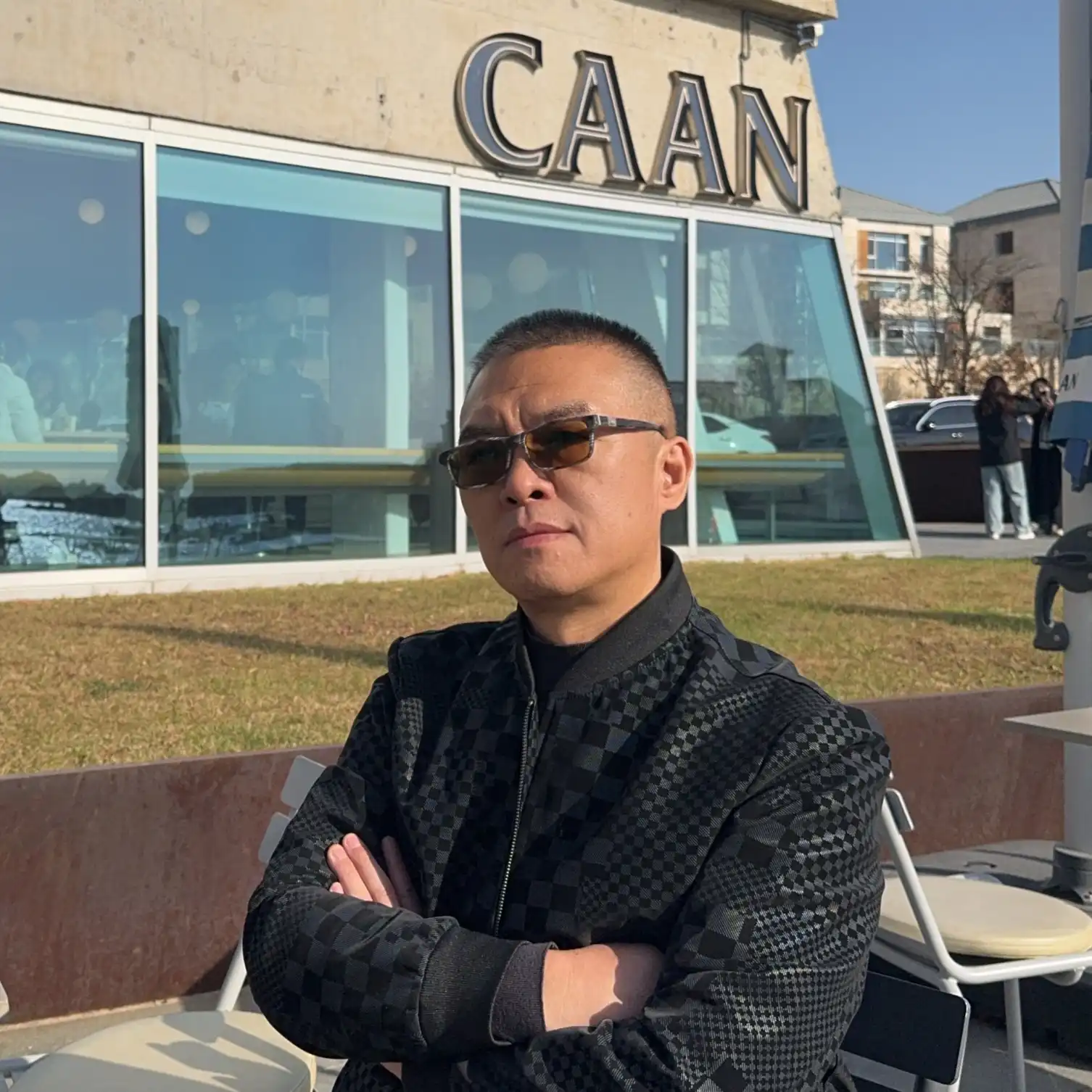
Hiker
15+ years in investment & venture building & venture building;Executive Education in Management (Peking University);International Business major;Market entry architecture & key network access
Get a Direct Response from Our China Expertise.
he challenge you're facing is one we've already solved. Leverage our proven framework to receive your custom China blueprint.
Recommended Blog

Is a WFOE Necessary for Selling Products in China?

What Is QuickStart China and How It Supports Label Strategy?

Research Report on Consumption Habits and Expenditure in China's Beverage Market



Paths and Methods for Foreign Cosmetic Companies Entering the Chinese Market


China Market Research: Your First Step to Success or Failure