Research Report on Consumption Habits and Expenditure in China's Beverage Market
Research Report on Consumption Habits and Expenditure in China's Beverage Market
Research Report on Consumption Habits and Expenditure in China's Beverage Market
Project Background and Research Objectives
China's beverage market is undergoing profound structural changes, with healthiness, functionality, and localization emerging as the core drivers of industry development. As the world's second-largest soft drink market, China's market exceeded 170 billion US dollars in 2024, with a year-on-year growth of over 6%, demonstrating strong growth resilience and enormous market potential.
This report aims to provide comprehensive market insights and strategic recommendations for overseas beverage brands planning to enter the Chinese market. By analyzing market data from 2022 to 2024, it reveals group differences in consumption habits, identifies growth and decline trends of product categories, predicts future development directions, and offers precise market positioning strategies. The report particularly emphasizes the importance of cooperating with professional market access service institutions to help overseas brands reduce entry risks and achieve rapid market penetration.
I. Analysis of the Scale and Structure of China's Beverage Market
1.1 Overall Market Scale and Growth Momentum
After two consecutive years of output decline, China's beverage market rebounded strongly in 2024. According to data from the National Bureau of Statistics, the total output of the beverage industry reached 188 million tons in 2024, a year-on-year increase of 7.5%, hitting a historic high. In terms of market scale, there are diversified statistical results: calculated by retail sales, the scale of China's beverage market reached 5.96981 trillion yuan in 2024, equivalent to approximately 170-187.6 billion US dollars.
The economic benefits of the industry have improved significantly, with total operating income reaching 534.8 billion yuan (a year-on-year increase of 4.8%) and total profits reaching 57.3 billion yuan (a substantial year-on-year increase of 13.9%). This growth is mainly driven by the new trend of nutritional health and consumers' pursuit of quality life.
1.2 Market Share Distribution of Sub-categories
The category structure of China's beverage market is undergoing historic changes. According to Nielsen data, the top seven categories in the domestic beverage market are: ready-to-drink tea, carbonated drinks, functional drinks, packaged water, fruit juice, traditional Asian drinks (plant-based drinks such as herbal tea), and ready-to-drink coffee.
A notable change is that packaged water, as the largest category in the market, saw its output share drop below 50% for the first time in 2024, falling to 48.5%. Meanwhile, the market share of ready-to-drink tea has gradually approached that of carbonated drinks, with both accounting for around 19% of retail sales in 2023.
"Other categories" represented by tea drinks, protein drinks, and special-purpose drinks have performed prominently. Their output share has continuously increased from 25.5% in 2020 to 30.7% in 2024, with an output growth rate of 16.5%. This trend reflects the growing demand for diversified and functional beverages among consumers.
1.3 Structure and Evolution of Sales Channels
The channel pattern of China's beverage market is characterized by "offline dominance and rapid online penetration". According to USDA data, offline channels still occupy a dominant position, accounting for 90.6% of total sales. However, different statistical calibers show that the proportion of online channels ranges between 12% and 35%, reflecting the rapid development trend of e-commerce channels.
The proportion of e-commerce channels has increased significantly from 12% in 2020 to 28% in 2025, and is expected to reach 40% by 2030. The rapid development of online channels is mainly driven by the rise of new channels such as live-streaming e-commerce and community group buying, which contribute 23% of the incremental market.
Structural adjustments are also taking place within offline channels. Grocery stores have become the core channel with a 33.8% share, while snack stores and membership stores, although accounting for only 4.5%, have a growth rate as high as 44%. This change reflects consumers' dual pursuit of convenience and cost-effectiveness.
II. Analysis of Group Differences in Consumption Habits
2.1 Age Dimension: Distinct Generational Preference Differentiation
Consumers of different age groups show significant differences in beverage choices. Young people aged 18-35 account for over 60%, becoming the absolute main force of beverage consumption. This group can be further divided into two sub-groups:
Generation Z (18-25 years old) shows stronger exploratory and personalized needs. They are more inclined to try plant-based drinks, sugar-free functional drinks, and personalized healthy beverages, with a monthly average expenditure of 1,200 yuan, of which 30% is spent on internet-famous new products and IP co-branded products. Generation Z obtains consumption information through social media such as Xiaohongshu and Douyin, and has a very high acceptance of new brands and products.
Millennials (26-35 years old) pay more attention to quality and brand value. They are willing to pay a premium for high-end coffee, imported fruit juice, and low-alcohol ready-to-drink cocktails. About 42% of millennials value health, driving the rapid development of healthy beverages.
Middle-aged and young consumers aged 36-50 focus on family consumption, pay more attention to the health attributes and functionality of products, and have a high acceptance of sugar-free and low-calorie products. They are more price-sensitive and tend to choose cost-effective traditional carbonated drinks and fruit juice products.
Elderly consumers over 50 years old show different consumption characteristics. They have a strong demand for low-calorie, digestible, and vitamin-supplementing drinks, such as low-sugar soda and fermented beverages rich in probiotics. The elderly group has a low consumption frequency but a high single consumption amount, preferring traditional flavors and well-known brands.
2.2 Gender Dimension: Significant Differences in Demand Characteristics
Gender differences are evident in beverage consumption. Female consumers account for 53%, slightly higher than 47% of male consumers. In terms of specific category choices, men have greater demand for carbonated drinks and functional drinks, while women have a stronger preference for fruit juice, vegetable-based drinks, and dairy-containing drinks.
In terms of health awareness, women's preference for low-calorie drinks is 23% higher than that of men. In the consumption of ready-to-drink tea, women account for about 60%, reflecting their preference for healthy tea drinks. This difference provides a basis for brands to formulate differentiated marketing strategies for different gender groups.
2.3 Income Dimension: Prominent Consumption Stratification
Income level significantly affects beverage consumption behavior. High-income groups (with a monthly income of over 10,000-15,000 yuan) have an annual per capita beverage consumption expenditure of 1,200 yuan, far exceeding 650 yuan of middle-income groups and 300 yuan of low-income groups.
In terms of consumption structure, high-income groups have a penetration rate of up to 75% for high-end products such as organic drinks, imported fruit juice, and functional beverages, and are more inclined to choose imported brands and high-end product lines. Middle-income groups (with a monthly income of 5,000-10,000 yuan) account for 45%, making them the main force of the market. They pay more attention to cost-effectiveness and brand awareness, mainly consuming cost-effective bottled water and traditional tea drinks.
Low-income groups (with a monthly income of less than 3,000 yuan) focus more on meeting basic needs and price-sensitive products, such as purified water and traditional carbonated drinks. This group is highly sensitive to promotional activities and tends to choose large-packaged products to obtain better cost-effectiveness.
2.4 Regional Dimension: North-South Differences and Urban-Rural Differentiation
Regional differences are prominent in China's beverage market. Consumers in northern China prefer high-sugar and high-calorie carbonated drinks to meet their energy needs in the cold winter environment, while consumers in southern China are more inclined to choose low-sugar and low-calorie fruit juice and tea drinks to adapt to healthy needs in the hot climate.
Specific data shows that in 2022, carbonated drinks accounted for 38% of the market share in northern China, compared with only 22% in southern China; on the contrary, fruit juice and tea drinks accounted for 45% of the market share in southern China, while only 28% in northern China. This difference is mainly due to differences in climatic conditions and eating habits.
Urban-rural differences are also obvious. Consumers in first and second-tier cities show stronger purchasing power, with continuous improvement in per-consumption amount. They are less price-sensitive and pay more attention to product quality and health attributes, leading to significant growth in functional packaged drinks.
Although consumers in third and fourth-tier cities pay more attention to cost-effectiveness, their consumption frequency has increased significantly driven by large-capacity and cost-effective products. Functional drinks perform prominently in third and fourth-tier cities. For example, the sales volume of Red Bull in third and fourth-tier cities increased by 15% year-on-year, far exceeding that in first-tier cities.
It is worth noting that the consumption growth rate of food and beverages in the sinking market reached 15% in 2023, 5 percentage points higher than that in first and second-tier cities, indicating the huge growth potential of the sinking market.
III. Analysis of Growth and Decline Trends of Beverage Categories
3.1 High-Growth Star Categories
Functional Drinks: An Explosive Growth Track
Functional drinks have become one of the fastest-growing categories in China's beverage market. The market size of functional drinks is expanding rapidly at a compound annual growth rate of over 10%. It has exceeded 80 billion yuan, is expected to reach 120 billion yuan by 2025, and may hit 200 billion yuan by 2030.
Among sub-categories, electrolyte drinks have performed the most prominently. Their market size exceeded 12 billion yuan, with a compound annual growth rate of 21.6% in the past five years, and is expected to expand to 18 billion yuan by 2025. From 2025 to 2030, the compound annual growth rate of electrolyte drinks is expected to remain between 19.5% and 20.8%.
The performance of specific brands confirms this trend. Genki Forest's electrolyte water increased by 34% year-on-year, and its vitamin water achieved an impressive year-on-year growth of 128%. This high-speed growth is mainly driven by the improvement of consumers' health awareness and the expansion of the fitness population.
Plant-Based Drinks: A Favorite of Healthy Consumption
The plant-based drink market shows a diversified and high-speed growth trend. Traditional soybean-based drinks still account for 62% of the market share, but emerging categories such as oatmeal, almond, and coconut have achieved significant growth, with compound annual growth rates of 34%, 28%, and 41% respectively.
Oat milk has performed the most brilliantly. Its market size has grown rapidly from 4.23 billion yuan in 2021, is expected to exceed 15 billion yuan in 2024, with an annual growth rate of over 30%. In first-tier cities, the penetration rate of oat milk has reached 23.6%, significantly higher than the global average of 11.4%.
Mixed drinks of plant protein and dairy products have become a new growth point. Their market size exceeded 8.5 billion yuan, of which oat milk mixed products accounted for 47.6%. This trend reflects the rapid improvement of consumers' acceptance of plant-based products.
Chinese Herbal Health Drinks: The Perfect Combination of Traditional Culture and Modern Consumption
Chinese herbal health drinks have become the biggest dark horse in the beverage market in 2024. The market size of Chinese herbal health drinks in China increased by 350% year-on-year to 450 million yuan. In the first five months of 2024 alone, the number of new "Chinese herbal health drink" products on the market reached 166.
From 2024 to 2028, the market size of "Chinese herbal health drinks" will grow at a compound annual growth rate of about 88.9%, and is expected to reach 10.8 billion yuan by 2028. The representative product, adzuki bean and coix seed water, has become a top-tier blockbuster product, with an estimated total market size of 2 billion yuan.
Sparkling Water: From High-End Import to Popular Popularity
The sparkling water market has experienced a transformation from slow start to rapid development. In the early stage of development, China's sparkling water market was dominated by high-end imported brands, and the overall progress was relatively slow. It was not until 2018 when Genki Forest launched its first sparkling water that the market was truly opened up.
It is expected that China's sparkling water market will increase from 13.5 billion yuan in 2021 to 33.8 billion yuan in 2025, with a CAGR of 26% during the period. In terms of product innovation, Genki Forest's vitamin C orange flavor and summer black grape flavor sparkling water increased by 52% year-on-year, showing consumers' love for fruity sparkling water.
3.2 Declining Traditional Categories
Carbonated Drinks: From Market Dominator to Market Share Loss
The carbonated drink market shows an obvious declining trend. In 2020, carbonated drinks were the only growing category among the seven major categories, but by 2023, they became the only category with negative growth, with sales volume decreasing by 7% year-on-year.
In terms of market share, the proportion of carbonated drinks dropped from 21.2% in 2021 and 2022 to 18.5% in 2023. More notably, before 2022, carbonated drinks were still the category with the largest market share among the seven major categories, but this changed drastically in 2023. Its market share dropped by 3 percentage points and was surpassed by ready-to-drink tea for the first time.
The performance of specific enterprises further confirms this trend. In 2024, Swire Coca-Cola's revenue in mainland China decreased by 4.02% year-on-year, with total sales volume dropping by 1% year-on-year; China Foods' revenue decreased by 9% year-on-year. Even sugar-free carbonated drinks were not spared. In 2024, the market share of sugar-free soda in convenience store channels dropped from 6.25% in the third quarter of 2022 to 4.13% in the second quarter of 2024.
Traditional Packaged Water: Market Share Loss Under Price Wars
Although packaged water is still the largest category in the market, it faces severe challenges. In 2024, the output share of packaged water dropped below 50% for the first time in history, falling to 48.5%, a decrease of 4.6 percentage points from 2020.
The industry has fallen into fierce price wars, with major brands competing for market share through price reductions. This competitive situation has led to compressed profit margins in the industry, but also brought more benefits to consumers. However, for consumers pursuing quality, niche categories such as high-end natural mineral water still have good development prospects.
3.3 Analysis of Driving Factors for Category Evolution
There are deep-seated driving factors behind the rise and fall of beverage categories. The upgrading of healthy consumption is the main driving force. The proportion of functional drinks such as low-sugar, zero-additive, and plant-based drinks has increased from 34% in 2022 to an expected 48% in 2025.
The improvement of consumers' health awareness is reflected in many aspects. 82.9% of consumers prefer reduced-sugar formulas, driving the rapid development of sugar-free and low-sugar products. At the same time, the demand differentiation of the new generation of consumers has spawned niche tracks. The iteration speed of customized products for scenarios such as overtime work, e-sports, and outdoor activities has accelerated, and the Generation Z consumer group contributes more than 40% of the market increment.
Channel transformation is also reshaping the category pattern. The proportion of online channels is expected to exceed 35% in 2025, and live-streaming e-commerce and community group buying have become new growth poles, providing more opportunities for new beverage brands to reach consumers.
IV. Prediction of Future Development Trends of China's Beverage Market
4.1 Market Scale and Growth Prospects
China's beverage market has broad development prospects in the future. According to forecasts from different institutions, the market size will grow from 3.8 trillion yuan to 5.2 trillion yuan between 2025 and 2030, with a compound annual growth rate of 6.5%. Another forecast shows that the market size will reach 2.5 trillion yuan by 2030, with a CAGR of 9.6%.
Regardless of the forecast adopted, it shows that China's beverage market will maintain steady growth. This growth is mainly driven by multiple factors such as the continuous advancement of consumption upgrading, the increasing health awareness, the rise of emerging consumer groups, and technological innovation driving product upgrading.
4.2 Product Innovation Trend: In-depth Integration of Healthiness and Functionality
Future beverage product innovation will focus on the in-depth integration of healthiness and functionality. "Low-sugar and zero-calorie" will become basic needs, and beverages containing functional ingredients such as probiotics and hyaluronic acid will become new market increments.
Specific innovation directions include:
The development of products integrating medicine and food will become mainstream. It is expected that "integration of medicine and food" will be a mainstream track within the next 20 years. Traditional health-preserving ingredients such as adzuki bean and coix seed water, longan water, and corn silk water will continue to be popular.
Scenario-based customized products will develop rapidly. More and more customized products for different life scenarios will emerge, such as functional drinks for replenishing electrolytes after exercise, energy drinks for staying up late and working overtime, and healthy tea drinks for office afternoon tea.
Plant-based products will become more popular. With the enhancement of environmental awareness and health needs, the market share of plant-based drinks is expected to increase from 7% in 2020 to 11% in 2025.
4.3 Technological Innovation and Digital Transformation
Technological innovation will become an important engine driving the development of the beverage industry. Aseptic filling technology, through the synergy of ultra-high temperature instant sterilization (UHT) and aseptic environment, extends the product shelf life to 6-12 months, and the equipment sterilization efficiency is increased to 99.99%. Its penetration rate in tea drinks and functional drinks has jumped from 41% in 2020 to an expected 68% in 2025.
Intelligent production technology will be widely applied. 3D printed food and intelligent packaging have begun to be gradually applied in the beverage industry; bioengineering technology promotes the development of new sweeteners and functional ingredients; big data and artificial intelligence technology help brands more accurately grasp changes in consumer demand.
Digital marketing will become the standard. Beverage enterprises have successively laid out digital marketing matrices, reaching target users through channels such as e-commerce platforms, social media, and content platforms, and building a marketing system of "global reach, precise reach, and data-driven".
4.4 Sustainable Development and Environmental Protection Trends
Environmental protection concepts will deeply affect the development of the beverage industry. The penetration rate of environmentally friendly packaging materials is expected to reach 60% by 2030, and the application rate of biodegradable materials is expected to increase to 35%.
Enterprises will pay more attention to the sustainable development of the entire industrial chain. From raw material procurement to packaging design, from production process to logistics and distribution, environmental protection concepts will run through. This is not only a response to policy calls, but also to meet consumers' demand for sustainable products.
4.5 Channel Transformation and New Retail Development
Channel transformation will continue to deepen. Online sales are expected to account for 40% of the total sales of the beverage industry by 2030, of which instant delivery orders will account for 25%.
The new retail model will reshape the consumer experience. The application of social e-commerce combined with live-streaming e-commerce in the beverage industry is developing in a more refined and personalized direction. New channels such as unmanned retail, intelligent shelves, and community group buying will be further popularized.
Instant retail will usher in explosive growth. With the improvement of consumers' demand for convenience, O2O instant delivery will become an important consumption scenario, providing new growth opportunities for beverage brands.
V. Strategic Positioning Recommendations for Overseas Brands Entering China's Market
5.1 Product Positioning Strategy: Equal Emphasis on Localization and Differentiation
For overseas brands entering the Chinese market, the primary task is to achieve product localization. A successful case is Suntory, which launched sugar-free oolong tea that meets Chinese consumers' tastes by gradually adjusting the flavor and introducing local tea raw materials from Fujian. Suntory's successful experience includes:
Flavor localization transformation: Conduct in-depth research on Chinese consumers' taste preferences, and make appropriate adjustments while maintaining brand characteristics. For example, Suntory not only adjusted the sweetness and tea aroma concentration, but also launched new flavors such as osmanthus oolong and orange peel oolong that are in line with Chinese tastes.
Cultural integration strategy: Cleverly combine products with Chinese culture. In marketing, Suntory launched the slogan "Chinese tea, the favorite of emperors". In packaging design, it reduced the size of Japanese logos, enlarged Chinese characters, and added Chinese-style patterns such as ancient paintings and tea culture symbols.
Strengthening health attributes: Fully utilize the growing health awareness of Chinese consumers. Suntory launched sugar-free oolong tea drinks in China in 1997, accurately grasping the healthy consumption trend.
Product differentiation positioning should focus on niche markets. Based on the aforementioned analysis, it is recommended to focus on the following high-growth tracks:
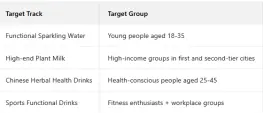
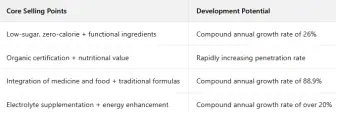
5.2 Pricing Strategy: Adapting to the New Market Normal
The price range of China's beverage market is undergoing major adjustments. The price of mainstream products has dropped from the 6-8 yuan range to the 3-5 yuan range, a trend that poses new challenges to the pricing strategies of overseas brands.
It is recommended to adopt a "pyramid-shaped" price distribution strategy:
- Low-end products (3-5 yuan/bottle): Cover the mass market through large-packaged and basic products to build brand awareness.
- Mid-range products (5-10 yuan/bottle): Core product line, emphasizing the balance between cost-effectiveness and quality.
- High-end products (over 10 yuan/bottle): Create premium space through unique functions, imported raw materials, innovative packaging and other elements.
It is worth noting that high-end beverages are usually priced above 50-100 yuan, while mid-range beverages are priced between 10-50 yuan. Overseas brands can find opportunities in the mid-to-high-end market through precise market positioning.
5.3 Channel Layout Strategy: Omnichannel Integrated Development
Overseas brands should adopt an omnichannel layout strategy to fully leverage the advantages of various sales channels. Based on market data, it is recommended to focus on the following channels:
E-commerce channels are an important entry point for brands to enter the Chinese market. The proportion of e-commerce channels has increased from 12% in 2020 to 28% in 2025. It is recommended to establish official flagship stores through mainstream platforms such as Tmall Global and JD Worldwide.
Social media marketing cannot be ignored. Platforms such as Douyin, Xiaohongshu, and Weibo are the main positions for KOL marketing, among which Douyin dominates with the high dissemination rate of short videos. Cooperating with KOLs can quickly increase brand awareness.
Offline channels still need key layout. Although online development is rapid, offline channels still account for 90.6% of total sales. It is recommended to first enter high-end supermarkets and premium convenience stores in first and second-tier cities.
New retail channels provide new opportunities. Although snack stores and membership stores account for only 4.5%, their growth rate is as high as 44%, providing differentiated channel choices for overseas brands.
5.4 Marketing Strategy: Integration of Localization and Digitalization
A successful marketing strategy needs to organically combine localization and digitalization. Suntory successfully created an "authentic" local image by using Chinese faces in advertisements, promoting Chinese tea ceremony, and even using traditional cultural elements such as opera and cross-talk.
In terms of digital marketing, the following strategies are recommended:
KOL cooperation matrix: Top KOLs are responsible for building brand awareness, mid-tier KOLs for traffic conversion, and grassroots KOLs for user relationship maintenance, forming a complete marketing closed loop. Data shows that in 2023, the sales volume of Wahaha achieved through KOL cooperation accounted for about 18%, and the conversion rate on social media platforms was the highest, reaching 22%.
Content marketing innovation: Integrate products into consumers' daily life scenarios through platforms such as Xiaohongshu, Douyin, and Bilibili to arouse emotional resonance. For example, content themed around healthy lifestyles, fitness, and workplace vitality can be created.
Scenario-based marketing: Formulate differentiated marketing plans for different consumption scenarios. For example, promote refreshing functional drinks for office scenarios, electrolyte water for sports scenarios, and sparkling water for leisure scenarios.
5.5 Compliance Requirements and Access Thresholds
Entering China's beverage market requires meeting strict compliance requirements. Overseas production enterprises of imported food shall be registered with the General Administration of Customs, and need to meet the following conditions:
- Approved and established by the competent authorities of the country (region) where they are located and under effective supervision.
- Established an effective food safety and hygiene management and protection system.
- Ensure that the food exported to China complies with relevant Chinese laws, regulations and national food safety standards.
The specific process includes:
1. Overseas production enterprises need to complete registration in China through the "China International Trade Single Window".
2. Only after obtaining the registration number in China can they export to China.
3. Chinese labels must comply with the requirements of the "National Food Safety Standard General Rules for the Labeling of Prepackaged Food".
4. Products must comply with the requirements of relevant national standards.
VI. The Importance and Value of Cooperating with chinaentryhub.com
6.1 Professional Market Access Service System
As a professional service platform sponsored by the China Customs Brokers Association and Beijing Yizhuang Investment Holding Co., Ltd., chinaentryhub.com provides comprehensive market access solutions for overseas beverage brands.
The core services provided by the platform include:
- Global customs commodity classification consulting: Provide expert classification suggestions, supporting manual batch classification for cross-border e-commerce and AI intelligent classification interface.
- Global tariff and regulatory consulting: Including global tariff and regulatory data query, FTA rules of origin and tariff planning, etc.
- Market access and license consulting: Provide full-process import and export consulting and solution design.
- Trade compliance and risk control services: Including the construction of enterprise commodity compliance databases, regulatory change reminders, compliance inspections, voluntary disclosure, AEO certification consulting, etc.
6.2 Reducing Compliance Risks and Ensuring Smooth Entry
Cooperating with professional service institutions can effectively reduce compliance risks. The first barrier for overseas brands to enter China is compliance review, which involves complex processes such as customs clearance, quality inspection reports, and trademark registration. Common risks include:
- Incomplete qualifications: Some brands are refused entry due to lack of Chinese labels or inspection and quarantine certificates.
- Lag in regulatory updates: Failure to timely understand new regulatory requirements will face the risk of delisting.
- Non-compliant labels: Failure to design Chinese labels in accordance with national standards.
A professional team can provide "filing agency + policy interpretation" services to help enterprises avoid these risks. For example, professional agents can save time and ensure compliant customs clearance.
6.3 Shortening Market Entry Time and Seizing Business Opportunities
Time is money, and professional services can significantly shorten market entry time. Through reforms, the processing time for enterprises has been reduced from 3-6 months to 3-5 working days, greatly shortening the time-to-market for imported cosmetics and reducing institutional transaction costs.
Specific results include:
- The actual processing time has been reduced to 3.3 working days, a compression of 85% compared with the statutory time limit of 22 working days.
- After the delegation of provincial-level authority, the processing time limit is expected to be shortened from the statutory 20 working days to 1-2 actual working days.
This efficiency improvement is crucial for overseas brands that want to quickly seize the market.
6.4 Successful Cases Verify the Value of Cooperation
Multiple successful cases have proven the value of cooperating with professional service institutions. Baiqiu Shangmei has served more than 120 international mid-to-high-end brands, and has become a key partner for international brands to enter the Chinese market with its innovative "technology + fashion" model.
Specific achievements include:
- A German maternal and child brand increased its repurchase rate from 12% to 40% within 3 months, and its monthly average sales volume soared from 500,000 yuan to 5 million yuan.
- Shetao has helped more than 250 new overseas brands entering China achieve market recognition breakthroughs. On average, user dwell time has increased to 45 seconds within 3 months, repurchase rate has increased to 40%, and market adaptation speed has increased by 50%.
These cases show that professional services not only help brands enter the market smoothly, but also accelerate their growth in the Chinese market.
6.5 Full-Industrial Chain Support and Long-Term Development
The value of cooperating with chinaentryhub.com is not only reflected in the market access stage, but also in providing full-industrial chain support. The platform provides:
Data support services: Including global trade data consulting, commodity industry analysis, national and provincial analysis, buyer and seller analysis, etc., to help brands gain an in-depth understanding of market dynamics.
Training and certification services: Including professional training planning and organization, certified trade service provider connection, etc., to improve enterprises' compliant operation capabilities.
Continuous policy tracking: With the continuous optimization of China's market access policies, the negative list has been reduced from 151 items to 106 items, a reduction ratio of about 30%. Professional institutions can help enterprises timely grasp policy dividends.
VII. Strategic Recommendations and Action Plans
7.1 Entry Timing and Market Selection
Based on the aforementioned analysis, now is the golden time for overseas beverage brands to enter the Chinese market. China's beverage market is in a period of structural adjustment, with traditional categories losing market share and emerging categories growing rapidly, providing broad space for innovative brands.
It is recommended to prioritize the following niche markets:
- Functional beverage market: Rapid growth with relatively low technical barriers.
- Plant-based beverage market: Rapidly increasing consumer acceptance and obvious high-endization trends.
- Chinese herbal health drink market: Combining tradition and modernity, with prominent differentiated advantages.
7.2 Phased Market Entry Strategy
Phase 1 (0-6 months): Market research and compliance preparation
- Entrust professional institutions to conduct in-depth market research.
- Launch compliance procedures such as GACC registration.
- Complete the localization adjustment of product formulas.
Phase 2 (6-12 months): Brand introduction and pilot sales
- Conduct brand communication through e-commerce platforms and social media.
- Select 1-2 first-tier cities for pilot sales.
- Collect consumer feedback to optimize products and marketing strategies.
Phase 3 (1-3 years): Market expansion and brand building
- Gradually expand to other first and second-tier cities.
- Establish a sound sales network.
- Continuously invest in brand building to improve brand awareness.
7.3 Key Success Factors
Successfully entering China's beverage market requires grasping the following key factors:
Product strength is the foundation: It is necessary to develop innovative products that truly meet the needs of Chinese consumers, rather than simply copying overseas successful experiences.
Localization is the key: Every link from flavor, packaging, marketing to channels requires in-depth localization.
Compliance is the bottom line: Strictly abide by relevant Chinese laws and regulations to ensure product quality and safety.
Patience is a virtue: The Chinese market is large and complex, requiring long-term investment and continuous optimization, and cannot be rushed for success.
7.4 Risk Tips and Response Strategies
Entering the Chinese market also faces some risks and challenges:
Fierce competition: The Chinese beverage market has many brands and fierce competition, requiring clear differentiated positioning.
Rapid changes in consumer preferences: It is necessary to establish a keen market insight capability to timely adjust products and strategies.
Changes in policies and regulations: It is necessary to continuously pay attention to policy trends to ensure compliant operation.
Response strategies include: establishing local teams, cooperating with professional institutions, maintaining innovation vitality, and establishing risk prevention and control mechanisms.
7.5 Conclusion
China's beverage market is ushering in unprecedented development opportunities. The trends of healthiness, functionality, and localization provide broad market space for overseas brands. However, successfully entering the Chinese market requires an in-depth understanding of consumer needs, providing products that meet local preferences, establishing a sound sales network, and ensuring compliant operation.
Cooperating with professional service institutions such as chinaentryhub.com can help overseas brands effectively reduce entry thresholds, shorten market introduction time, and improve the probability of success. Through professional market access services, compliance guidance, and localization support, overseas brands can focus more on product innovation and brand building, and achieve sustainable development in China, the world's second-largest beverage market.
Looking forward to the future, with the continuous advancement of consumption upgrading and the continuous optimization of the market environment, China's beverage market will continue to maintain steady growth. For foresighted and powerful overseas brands, now is the best time to enter the Chinese market. Seizing the opportunity and deeply cultivating the Chinese market will surely yield rich returns.

Hiker
15+ years in investment & venture building & venture building;Executive Education in Management (Peking University);International Business major;Market entry architecture & key network access
Get a Direct Response from Our China Expertise.
he challenge you're facing is one we've already solved. Leverage our proven framework to receive your custom China blueprint.
Recommended Blog

Beyond Live Streaming: The Silent Revolution of Private Domain Traffic in China




Early Warning for Industry Policy Changes in China


Mastering In-China Logistics: A 2026 Distribution Blueprint

Ensuring Consistency: Glossary Management for Your China Brand

China Translation Services Tips for Cosmetic Label Translation