China Social Commerce Tips: Sell Manufactured Goods via WeChat
The Strategic Logic: Why Manufactured Goods Belong on WeChat
- The Strategic Logic: Why Manufactured Goods Belong on WeChat
- Foundation First: Account, Mini Program, and Payment Architecture
- Content and Conversion: Turning Attention Into Orders
- Scaling Operations: Logistics, After-Sales, and Long-Term Growth
- Conclusion
- FAQ
- Your China WeChat Growth Partner: China Entry Hub
- References
Compiled by: The Import-Export Committee of the China Food and Pharmaceutical Enterprises Quality and Safety Promotion Association
http://www.chinaentryhub.com
Foreign CEOs used to be mystified by the term “selling on WeChat. It should get them excited in '25.WeChat is the world’s most flexible commercial platform for manufactured products, a content, community and conversion ecosystem rolled into an app that over a billion Chinese consumers already have open on their phones. For brands selling anything from consumer electronics to home appliances, from beauty devices to kitchen tools, it offers something no Western equivalent can match: a closed ecosystem in which discovery, evaluation, purchase, payment and after-sales service are all part of one seamless flow. The issue is that China social commerce is merciless to businesses that use it as a translation exercise. It is cultural fluency, platform mechanics, and partner choices that determine who wins. Here are recommendations from businesses that have done it well and mistakes they wish they hadn’t made.
The Strategic Logic: Why Manufactured Goods Belong on WeChat
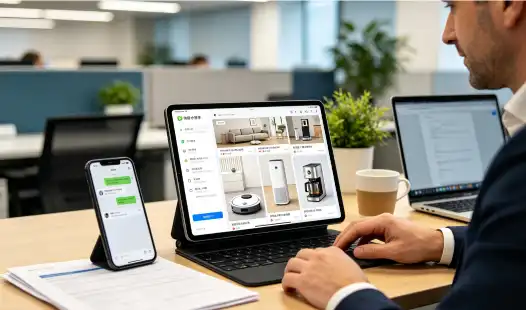
Tactical execution requires a clear strategic reason for international producers. Why put money into WeChat and not double down on Tmall Global or Amazon China? The explanation is that this platform provides a distinct structural advantage for produced items.
WeChat Rewards Depth Over Breadth
Open markets are optimised for keyword search and price comparison. WeChat rewards companies that establish depth – meaningful content, real customer connections, layered interaction over time. Manufactured items need more explanation than commodity products generally. A customer may purchase a phone cover in three clicks on a marketplace, but a premium robotic vacuum, a high-end air purifier, or a professional-grade hair dryer needs demonstration, comparison, and trust. WeChat’s content forms – long-form articles, short films, Mini Program product sites, and one-on-one customer conversations – are geared for this kind of deliberate purchase. Brands that go deeper see conversion rates and client lifetime value that mass marketplaces can’t compete with.
The Service Layer Is Your Competitive Moat
With manufactured items, the post-purchase service is frequently the difference between a client buying again and recommending the brand to friends. Through WeChat’s native messaging, customer service Mini Programs, and WeChat Work interfaces, firms can provide a level of support that no conventional e-commerce platform can match. Consider a consumer who buys an espresso machine, gets a WeChat message with personalised brewing tips, joins a brand community of like-minded owners, and arranges a one-on-one video consultation for maintenance — all inside the same app. This service layer is a moat. Competitors may imitate your product, but they can’t readily mimic the relational infrastructure you establish within WeChat.
WeChat Search Is a Quietly Powerful Acquisition Channel
Many international businesses underestimate WeChat Search. It acts as a combination of Google and a content recommendation engine, bringing up Official Account articles, Mini Programs, and mini-games depending on user enquiries. For manufactured items that have an aspect that's instructive — “best robot vacuums for pet hair,” “how to choose an air purifier for Beijing winters” — WeChat Search becomes a free, high-intent traffic source. Brands that focus on SEO-style content optimisation inside WeChat commonly see acquisition costs 60% to 80% cheaper than paid advertising on marketplaces. This is one of the most underleveraged benefits of China's social commerce right now.
Want to understand whether your manufactured product category has strong potential inside WeChat? Contact our specialists at info@chinaentryhub.com for a strategic category assessment.
Foundation First: Account, Mini Program, and Payment Architecture
You don’t build the correct structural base before you can race in WeChat. This basis is more taxing for produced items than for simpler categories.
Selecting Between Service Account and Subscription Account
All brands need to pick the kind of Official Account. Subscription Accounts are appropriate for content-heavy campaigns that demand daily publication – suitable for manufactured goods firms that want to produce frequent instructional material, product deep-dives, and user tales. However, they will be in a special folder, thus less visible. Service Accounts appear in the user’s chat list, have more visibility, and have full access to Mini Programs, WeChat Pay, and complex APIs. For most firms that produce manufactured items, the best option is a hybrid: an assistance Account for transactional moments, customer assistance, and hosting Mini Programs, with a Subscription Account for daily content creation. This dual-account system costs extra to maintain but significantly extends your reach
Designing a Mini Program That Mirrors Your Brand Experience
In essence, your WeChat Mini Program is a mobile website without the hassle of a browser. For produced items, it should be more than a product catalogue. Best-performing Mini Programs provide sophisticated product visualisation (3D models, 360-degree product views, video demonstrations), comparison tools to assist consumers in assessing choices, and integrated consultation scheduling for higher-consideration purchases. The Mini Program should also smoothly integrate WeChat Pay, logistical monitoring, refunds, and customer service. Speed counts – if your load times are above two seconds, you are losing quantifiable conversion. Hire a development partner that knows the technical limitations of WeChat and the visual language of your company.
Solving the WeChat Pay Settlement Challenge
One of the biggest mistakes international manufactured products businesses make is believing WeChat Pay operates like Stripe. It does not To make payments into an overseas bank account, you need a licensed Chinese firm, a payment intermediary or a cross-border settlement partner. Each includes trade-offs in terms of cost, speed, and reporting transparency. Build your payment architecture before you start, not after. Brands that wait too long to make this choice often find themselves with robust revenues but inaccessible cash flow, which leads them to pricey emergency solutions. A trusted local partner can address this in weeks, not months.
Integrating Customer Service and CRM Early
Western e-commerce is often reactive in customer service, but WeChat clients want rapid, conversational help. This translates to manufactured items for skilled representatives who can answer technical queries, help with setup concerns, and give post-sales advice. Brands that expand well in China's social commerce invest in customer service gear that is local to WeChat — automated chatbots for routine queries, intelligent routing for complicated enquiries, and CRM systems that record every encounter for future personalisation. The expense is substantial, but so is the lifetime worth of a client who feels really supported.
Want to build a solid WeChat foundation the proper way from the start? For a structured setup consultation, please call our launch professionals at +8618600291000.
Content and Conversion: Turning Attention Into Orders
The ecosystem of WeChat rewards the companies that invest in the quality of the content, not simply in the product listings. The content-to-commerce pipeline for produced items needs careful engineering.
The Education-First Content Model
Chinese consumers don’t believe advertising; they trust education.” The most successful companies in the manufactured products space on WeChat are publishers. Their material is high quality and educational before it is sold. Imagine a top-of-the-line air purifier company that publishes articles about PM2.5 and indoor air quality and then effortlessly recommends its product as the answer. Or a smart lock company that does a series on home security stats in Chinese cities, creating awareness before conversion. This kind of instruction first works because it is how Chinese customers really buy – they do their homework, they ask various sources, and they respect experts. Brands that bypass this step and go straight to sales see their conversion rates crash.
Using Short Video and Live Streaming Inside WeChat
While Douyin is the king of short video in China, WeChat has included strong video capabilities inside Mini Programs and Articles as well. Short demo movies for products like a robotic vacuum avoiding obstructions, or a 30-second comparison of hair dryer airflow have been shown to provide substantial conversion boosts. WeChat Live is not as ubiquitous as its Douyin cousin, but it provides a more personal and high-trust environment perfect for product debuts and restricted promotions. The winning businesses weave written material, video, and live experiences into a planned story, not random updates. Each format supports the others.
Building Trust Through Verified Reviews and User Content
In China's social commerce, social proof is the most powerful conversion engine. For manufactured items, that means aggressively fostering consumer feedback, unboxing images, and user-generated videos. Encourage consumers to share their experience in brand forums, reply to each review personally, and display real user material on your Mini Program. Verified purchase badges, actual customer photographs, and video testimonials may increase conversion by 30 to 50% over brand-only material. Don’t be tempted to write phony reviews – Chinese customers are adept at sniffing these out, and the harm to your image much exceeds any short-term conversion lift.
Designing Conversion Paths That Feel Natural
Foreign brands’ greatest error is building WeChat campaigns that seem like Western digital marketing – strong calls-to-action, countdown clocks, hard-sell language. Chinese customers prefer gentler, more consultative conversion pathways. Try “Learn more about this model” instead of “Buy Now.” Instead of “Limited time offer”, try “This configuration is available while stock lasts.” It may be modest, but it makes a huge difference in response rates. Plan your conversion funnel around this cultural distinction. Make every contact point beneficial advice, not pressure.
Want a content and conversion audit tailored to your WeChat strategy? Connect with our growth advisors at info@chinaentryhub.com for a detailed review and recommendations.
Scaling Operations: Logistics, After-Sales, and Long-Term Growth
A WeChat shop is a live system. Once you start getting orders, it’s the operational rigour you bring to logistics, service and iteration that decides whether you grow or stall.
Building Logistics That Match Chinese Consumer Expectations
Chinese buyers want speedy, trackable, and dependable delivery and are merciless about defective items. If you ship larger or higher-value commodities, consider logistics partners with demonstrated expertise in handling your product category. Use branded packaging that both protects the goods and enhances your brand positioning. Add a personalised thank-you card and QR code to your WeChat community – every delivery is a re-engagement chance. Brands that see logistics as a marketing channel and not simply an operating expense create customer loyalty that pure advertising can’t purchase.
Standing Up After-Sales Service That Builds Loyalty
Manufactured items produce long-term value via after-sales service. A good support experience leads to a consumer making repeat purchases and becoming a brand champion. For WeChat, this means rapid one-on-one chat support, straightforward warranty procedures, easy access to replacement parts, and proactive maintenance reminders. Build a knowledge repository of frequently asked issues, educate your support crew on technical product expertise, and measure response time as a key performance indicator. The brands that do this well approach their service function as a profit center in masquerade as a cost center—it pays back in retention and referrals.
Using Data to Drive Continuous Improvement
Every interaction in the WeChat ecosystem creates data. This is a strategic advantage for the finest brands of products. Track what content themes are driving Mini Program visits, what goods are most often repurchased, what customer segments react to what offers, and what geographic locations convert best. Do A/B testing for headlines, product page layouts, and promotional techniques. Share these thoughts with your local team every week. The difference between companies that plateau and brands that rise to 8-figure revenue in China's social commerce is the compounding impact of constant optimisation.
Knowing When to Expand Beyond WeChat
Finally, remember that WeChat is a fortress, not the battlefield. But after you have built a solid, lucrative and operationally tight base, you can branch out into adjacent channels — Xiaohongshu for lifestyle-driven discovery, Douyin for viral moments, Tmall Global for search-driven scale. Data should be the trigger. When your repeat purchase rate and customer lifetime value on WeChat reach certain levels, you have the right to diversify. Rushed expansion dilutes focus and distributes resources too thin. Growing at the right moment amplifies your reach without abandoning the depth that made WeChat great in the first place.
Ready to scale your WeChat presence into a multi-channel China growth engine? Reach out to our team at info@chinaentryhub.com to design your next phase of expansion.
Conclusion
Selling manufactured items via WeChat is not a strategy — it’s a strategic commitment to one of the most powerful economic ecosystems on the globe. The winning businesses see it as a long-term home for their brand, investing in fundamental infrastructure, education-first content, operational excellence and rigorous growth. The advantages are real: strong client connections, high lifetime value, and a defensible position in China social commerce that rivals cannot readily copy. The market will not stand still. The companies that step up now, with the right partners and the right approach, will determine the next decade of success for foreign-made products in China.
FAQ
Q1: How long does it take to launch a manufactured goods brand on WeChat?
A1: Account setup and Mini Program development typically take 6 to 10 weeks. Compliance, logistics setup, and content production add another 4 to 8 weeks. A realistic first-sale timeline is 3 to 5 months from project kickoff.
Q2: Do foreign brands need a Chinese entity to sell manufactured goods on WeChat?
A2: In most cases, yes. A local entity, distributor, or licensed cross-border partner is required to enable WeChat Pay settlement, customs clearance, and platform compliance. Operating without one creates significant operational and legal risk.
Q3: What is the typical marketing budget for a WeChat launch in the manufactured goods category?
A3: Initial launch budgets typically range from 500,000 to 2,000,000 RMB, covering content production, KOL partnerships, paid promotion, and community operations. Mature programs scale budgets based on return targets, not fixed spending caps.
Your China WeChat Growth Partner: China Entry Hub
China Entry Hub helps international manufacturers of manufactured goods unlock the full potential of WeChat and China social commerce. From foundational setup and payment architecture to content strategy, KOL partnerships, and operational scaling, we provide end-to-end support tailored to your category, capital, and ambitions. Our bilingual team combines local insight with disciplined execution, and we align our success entirely with yours — we never take kickbacks from service providers. Whether you are launching your first product or scaling an established presence, we are your trusted bridge to one of the world's most valuable consumer markets. Contact us today at info@chinaentryhub.com and let's engineer your China growth story together.
The China Food and Pharmaceutical Enterprises Quality and Safety Promotion Association's Import and Export Industry Committee is based on an industry platform at the national level. It provides services like policy research, standards mutual recognition, regulatory compliance and customs clearance, brand globalization, global sourcing, cross-border settlement, and legal support for the whole import-export chain of food, pharmaceuticals, cosmetics, and medical devices. The Committee enables both local and foreign businesses to reach international markets in a safe and effective manner.
References
1. Tencent Holdings. WeChat Ecosystem Annual Report.
2. China Internet Network Information Center. Statistical Report on China's Internet Development.
3. McKinsey & Company. The Rise of Social Commerce in China's Consumer Goods Sector.
4. Boston Consulting Group. Channel Strategy for Foreign Brands in China.
5. iiMedia Research. China WeChat Mini-Program E-commerce Industry Report.
6. Deloitte China. Consumer Durables and Manufactured Goods Market Outlook.

Olivia
8+ years in enterprise service & partner management;Business Management major;Client Operations Dept;Partner coordination & success assurance;Client Experience Officer
Get a Direct Response from Our China Expertise.
he challenge you're facing is one we've already solved. Leverage our proven framework to receive your custom China blueprint.