Community Group Buying in China Social Commerce: Fuel Products
How Industrial-Scale Community Group Buying Works
- How Industrial-Scale Community Group Buying Works
- Fuel Categories Moved Through the Community Model
- Compliance Boundaries When Selling Mineral Fuels
- Launching a Pilot in China Social Commerce as a Foreign Supplier
- Conclusion
- FAQ
- Let China Entry Hub Guide Your Fuel Sales into China Social Commerce
- References
Compiled by: The Import-Export Committee of the China Food and Pharmaceutical Enterprises Quality and Safety Promotion Association
http://www.chinaentryhub.com
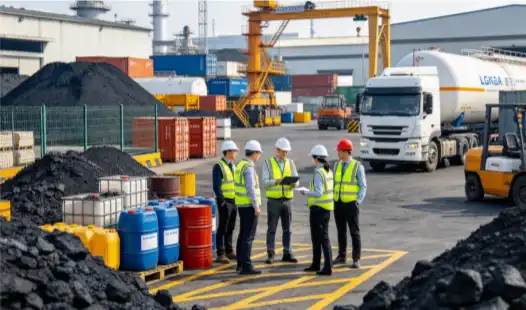
Imagine a group chat for factory owners in a small Chinese industrial city. One member sends a message: the diesel supplier can offer a better price if ten businesses place orders together. Another member shares a certificate from a coal distributor. A third asks whether the LNG truck can deliver to their street next Tuesday. Within hours, orders are consolidated and a deal is closed. This is not a typical grocery group buy. It is how community group buying is moving into mineral fuels, a category many overseas suppliers assume can only be sold through long-term contracts and bulk shipping. China social commerce creates a space where buyers with similar fuel needs find each other, combine their purchasing power, and negotiate with sellers through a trusted digital conversation. For a foreign fuel exporter, understanding this model may open a route to smaller customers that were previously invisible.
How Industrial-Scale Community Group Buying Works
Community group buying in China social commerce started with fresh produce, but its logic suits any product with predictable demand. Small manufacturers, trucking fleets, and rural heating providers all need the same mineral fuels on a regular schedule. Individual orders are too small to attract a qualified supplier or get a competitive freight rate. When they form a loose purchasing group inside a chat, their combined volume crosses a threshold. A supplier who can move one truckload of fuel oil or one container of industrial coal now has a reason to respond. The group becomes an informal buying club, with one or two more knowledgeable members acting as coordinators.
The logic of aggregating fragmented demand
A single factory may use only a few tons of coal each month, which makes direct import impractical. A community group buying network can aggregate dozens of such orders into a railway wagon or a fuel truck. In China social commerce, the coordinator also shares delivery schedules so multiple buyers can accept staggered drop-offs. This structure reduces logistics waste and gives small businesses access to wholesale pricing that was once reserved for large industrial clients.
Who participates in a fuel-buying group
Participants usually have a clear business purpose. They are licensed factories, agricultural cooperatives, logistics depots, or commercial building managers. They are not average consumers buying small cans of gasoline at the doorstep. A community group buying initiative for mineral fuels works only when every member has a legitimate consumption need and, where necessary, the required permits. The conversation inside the group is a mix of technical verification and volume negotiation. Trust is built through prior deliveries and third-party inspection reports, not through emotional live streams.
Why credit and trust matter more than price
Fuel transactions involve high absolute values and strict liability. If a buyer mistakenly purchases fuel outside their permitted use, the consequences are serious. If a seller sends a lower-grade product, multiple businesses suffer at once. Therefore, community group buying for mineral fuels relies on a form of social collateral. The coordinator's reputation inside the group is at stake. Every fuel supplier active in China social commerce must demonstrate a clean record, a valid business licence, and consistent fuel quality certification.
If your company already exports coal, refined oil products, or LNG, please contact our specialists at info@chinaentryhub.com or call +8618600291000 to see how this buying pattern could apply to your target customers.
Fuel Categories Moved Through the Community Model
Mineral fuels are not a single product. The three broad families–solid, liquid, and gaseous–each follow a different sales route in community group buying. A coal group may be organized by a heating cooperative. A diesel group may be led by a transport company that owns several trucks. An LNG group might consist of factories converting from coal to natural gas to meet emission targets. In every case, the fuel is not mailed like a parcel. It is delivered by a licensed carrier, and the group buy is essentially a shared ordering calendar.
Solid fuels: coal and coke
Solid mineral fuels include coking coal, steam coal, anthracite, lignite, coke, and briquettes. These products are usually sold by weight and quality specification. In a community group buying setting, buyers care about ash content, sulphur content, and calorific value. The coordinator often uploads the latest laboratory report to the chat before the closing date. Because coal can degrade during transport, the group also agrees on sampling and weighing procedures. This creates a community-based form of quality control that does not require a long-term contract.
Liquid fuels: crude oil, refined products, and fuel oil
Crude oil is generally sold through state-trading channels, but refined products such as diesel, gasoline, and fuel oil can be bought by businesses with permits through a more open market. In China social commerce, mini-groups of logistics companies may consolidate their weekly diesel demand. A reputable supplier quotes a floating price based on international benchmarks. Payment and delivery are documented, and every buyer receives a recognised invoice. This type of community group buying depends heavily on the participants holding the correct business licences and storage permits.
Gaseous fuels: natural gas and LNG
Liquefied natural gas and piped natural gas are more complex because delivery often requires a pressure vessel, a metering station, or a long-term supply agreement. Yet community group buying still appears among small industrial parks that cannot individually negotiate with a trader. A group of nearby factories can coordinate a single LNG tanker delivery to a shared vaporizer station. In such a case, the group buy is essentially a shared infrastructure arrangement supported by social commerce communication. The capital cost is divided, and safety is managed through a formal operating entity.
Would you like to compare your fuel product’s specifications with active requests from Chinese buyers? Email hello@chinaentryhub.com or contact us at +8618600291000 for a free channel briefing.
Compliance Boundaries When Selling Mineral Fuels
China social commerce does not remove the legal duties attached to mineral fuel trading. A seller may know that a community group is waiting for a shipment, but the transaction must still pass through licensed importers and distributors. Fuels are regulated by multiple state bodies. A foreign producer cannot simply appoint a chat coordinator as its authorized dealer. The coordinator is a demand aggregator, not a licence holder. For this reason, every community group buying initiative eventually connects to a compliant supply chain that has the right import approvals, storage facilities, and transport permits.
Import licensing, business scope, and receiving-party verification
Imported coal, crude oil, refined products, and LNG are subject to trade policy, customs classification, and in certain cases import quotas. For example, only designated enterprises may import crude oil; coal importers must comply with quality standards and environmental restrictions. Before joining any China social commerce network, an overseas fuel supplier must verify the importer's business scope. It is also important to confirm that the end users are legitimate industrial entities, not unlicensed resellers. Group coordinators should provide business licences, consumption records, and proof of storage use before the supplier commits to a volume.
Transport, storage, and safety approvals
Mineral fuels are moving hazardous goods. Truck drivers need special qualifications, vehicles must pass inspection, and unloading areas must meet safety standards. A community group buying arrangement may seem informal, but the physical delivery cannot be improvised. Fuel producers should always ask which third-party logistics company will carry the product and whether the storage tanks belong to a licensed depot. If a coordinator suggests leaving drums of diesel at a farm without proper facilities, this is a clear reason to step out.
Keep the digital claim clean
Every chat message, voice note, and posted specification becomes part of the transaction record. Suppliers should never say that a fuel has superior properties unless that property is certified in the official document. In China social commerce, a careless sentence inside a group can be forwarded to a regulator or used in a commercial dispute. The most durable approach is to use pre-approved technical sheets for every communication. If a coordinator asks clarifying questions, answer with the same care you would use in a signed contract.
If you need help mapping the regulatory path for a solid, liquid, or gaseous mineral fuel, contact our specialists at info@chinaentryhub.com and we will ask the right compliance questions before you meet any group organiser.
Launching a Pilot in China Social Commerce as a Foreign Supplier
Foreign fuel suppliers should treat community group buying as a tactical layer on top of conventional distribution. The first step is not to find an end user, but to connect with an importer or distributor that already serves the region where your target buyer groups operate. This partner can introduce you to one or two buying communities whose members have compatible needs. A pilot with one fuel type in one city gives you a controlled view of pricing transparency, delivery expectations, and the coordinator's reliability. Only after several successful rounds should you expand to a second group.
Build the pilot around a licensed intermediary
Even if the original conversation happens in a group chat, the transaction itself should be processed by a licensed intermediary. The intermediary places a formal purchase order with your exporting entity, clears the goods at the border, and resells the fuel to the businesses that joined the buying circle. In this arrangement, the community group buys from an authorised supplier and the foreign producer deals with one creditworthy counterparty.
Start with one predictable fuel and one region
A good first pilot is a steady grade of thermal coal or a standard diesel specification that is already known in the Chinese customs tariff. Do not begin with a new lubricant additive or a blended fuel that needs local certification. Regional demand matters. Coastal factories may be near an import terminal, while inland communities depend on rail or river transport. Work with your intermediary to choose a delivery point where you can observe the full chain without long travel times.
Choose an independent connector, not just a local friend
China Entry Hub acts as an independent connector for foreign brands exploring China social commerce. Because it charges the brand directly and does not receive kickbacks from partners, its recommendation is aligned with the brand’s desire to build a safe and durable market presence. For a fuel exporter, that alignment is essential. A distributor who earns hidden fees from logistics firms may not care whether the fuel storage site is certified. China Entry Hub’s role is to introduce you to pre-screened importers, legal advisers, and service partners who understand that mineral fuels require formal documentation.
Once you have completed one compliant community group buy and collected evidence of the delivery, you will know whether the model fits your company. Then you can gradually connect with more groups, add a second fuel product, or enter a new region.
If you are ready to explore an industrial-scale pilot, email hello@chinaentryhub.com or call +8618600291000 and tell us which mineral fuel you wish to sell and which Chinese port or city you prefer.
Conclusion
Community group buying in China social commerce is not limited to food and household goods. Mineral fuels can be bought and sold through networked groups when the participants are licensed businesses, the supplier meets import requirements, and a licensed intermediary handles the transaction. Foreign fuel exporters can test this exciting channel with one product, one region, and a trusted local partner. The social layer adds speed and transparency, but compliance still defines the boundary of where and how these transactions may happen.
FAQ
1.Is mineral fuel community group buying open to unlicensed consumers?
No, it is not a retail distribution channel for private individuals. Participants are licensed industrial users such as factories and trucking fleets. All sales need to go through licensed importers or distributors, and no fuel should be delivered without verifying the buyer’s business qualifications.
2.Can I test a small shipment through a WeChat group without establishing a Chinese entity?
You may work with a licensed Chinese importer who enters the group as the buying representative. That importer confirms the end user, places a formal order, and handles customs. Exporting directly to a group of informal users is not advisable and may place your company out of compliance.
3.Which type of fuel is most suitable for a first pilot?
A standard product with stable specifications and predictable logistics is best. Thermal coal, regular diesel, or LNG supplied by a licensed carrier can work if you have a reliable importer and a concentrated demand base. Avoid complex blends or products requiring local certification in the first round.
Let China Entry Hub Guide Your Fuel Sales into China Social Commerce
You now understand how community group buying can connect overseas suppliers with combined buyers of mineral fuels in China. Want to know which product is most likely to pass compliance and which regional network might be ready? China Entry Hub can introduce you to qualified importers, logistics partners, and legal advisors who know the difference between a valid energy transaction and a dangerous shortcut. Our transparent advisory model puts your interests first. Email info@chinaentryhub.com or call +8618600291000 to start a conversation about your fuel products through China social commerce. We will treat your name with the same care you are expected to show in the chat.
The Import and Export Industry Committee of China Food and Pharmaceutical Enterprises The Quality and Safety Promotion Association is developed on a national-level industrial platform. It specialises in the entire import-export chain for food, pharmaceuticals, cosmetics, and medical devices, offering services such as policy research, standards mutual recognition, regulatory compliance and customs clearance, brand globalisation, global sourcing, cross-border settlement, and legal support. The Committee enables both local and foreign businesses to develop securely and effectively into global markets.
References
1. Busalim, A. H., & Hussin, A. R. C. (2016). Understanding social commerce: A systematic literature review. International Journal of Information Management, 36(6), 1054–1067.
2. Hajli, N. (2015). Social commerce constructs and consumer's intention to buy. International Journal of Information Management, 35(2), 183–191.
3. Zhang, K. Z. K., & Benyoucef, M. (2016). Consumer behavior in social commerce: A literature review. Decision Support Systems, 86, 95–108.
4. Xiang, L., Zheng, X., Lee, M. K. O., & Zhao, D. (2016). Exploring consumers' impulse buying behavior on social commerce platform: The role of parasocial interaction. International Journal of Information Management, 36(3), 359–367.
5. International Energy Agency. (2023). Coal 2023: Analysis and forecast to 2026. Paris: IEA Publications.
6. National Bureau of Statistics of China. (2023). China Statistical Yearbook 2023. Beijing: China Statistics Press.

Xena
5+ years in livestreaming & short video content creation;Communication Studies major;Content Production Dept;Viral content strategy & brand storytelling
Get a Direct Response from Our China Expertise.
he challenge you're facing is one we've already solved. Leverage our proven framework to receive your custom China blueprint.