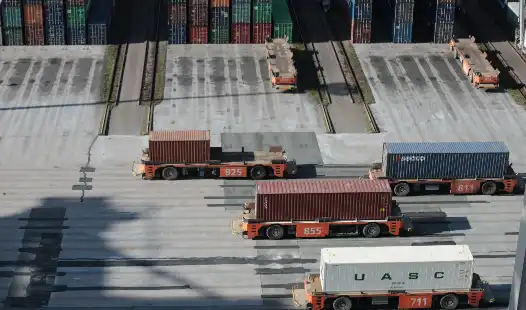
How to Speed Up China Customs Clearance and Logistics
What Common Challenges Slow Down International Business Expansion in China?
- What Common Challenges Slow Down International Business Expansion in China?
- Supply Chain Coordination and Logistics Planning for Overseas Companies
- How Can Foreign Importers Improve Operational Efficiency in China?
- Connecting With Trusted Local Logistics and Business Service Partners
- Integrated China Market Entry and Distribution Support Strategies
- Conclusion
- FAQ
- Ready to Accelerate Your China Market Success with China Entry Hub?
- References
Compiled by: The Import-Export Committee of the China Food and Pharmaceutical Enterprises Quality and Safety Promotion Association
You must have accurate China customs clearance documentation, obey the laws, and engage with skilled local service providers to speed up customs clearance and transportation processes. Foreign firms may reduce transit times by preparing necessary documentation, understanding about China's import restrictions, communicating with their logistics partners, and employing real-time package tracking technologies. Businesses can manage intricate processes with specialized service providers that know international shipping standards and China's regulatory environment. Proper classification, values, and documentation must be established in advance for fast clearing procedures to operate. Learning about China's logistics infrastructure, warehouse networks, and distribution routes can help companies enter new markets quicker and function smoothly.
source:chinaentryhub
What Common Challenges Slow Down International Business Expansion in China?
Foreign companies entering China confront several challenges that slow market entry and operational effectiveness. Development of successful mitigation methods begins with understanding these obstacles.
Regulatory Complexity and Documentation Requirements
China's import laws are quite stringent and distinct from Western ones. Companies must use precise processes for categorizing things, valuing them, and following paperwork standards. The HS code system is exact since misclassifying items may delay, penalize, or refuse delivery. Foreign companies often underestimate how extensive and how specialized the documentation is. This documentation comprises commercial invoices, packing lists, certificates of origin, and product-specific compliance papers.
Communication and Process Transparency
word barriers include more than just problems with translation. They also include issues with technical terms and legal words that need to be interpreted by a professional. Time zone differences make real-time contact harder, which could make it take longer to solve urgent problems. Once goods hit China's logistics network, many foreign companies have trouble keeping track of their shipments. This makes it hard to plan inventory and keep customer promises. To get around these problems, it's important to build relationships with trustworthy local partners, such as China Logistics Solutions, who offer open lines of communication.
Supply Chain Coordination and Logistics Planning for Overseas Companies
Effective supply chain management in China requires comprehensive planning that addresses the entire journey from origin to final destination. China's logistics solutions must account for both international shipping considerations and domestic distribution requirements.
Integrated Network Design
First, create networks that meet cost-effectiveness and service level standards. When choosing a port, companies must consider how close it is to their factories, how much storage space is available, and how easy it is to get goods to other places. Strategically placing fulfilment centres reduces travel times to key markets and maximizes goods storage costs. Companies must consider port proximity to their manufacturing, storage capacity, and shipping ease while choosing a port. Strategically situating fulfillment hubs reduces travel times to key markets and maximises storage costs. Planning multimodal transportation like maritime freight, rail, and trucks makes it adaptable and problem-solving.
Risk Management and Contingency Planning
Supply chains with resilience have backup strategies for various interruptions. Having several suppliers, carriers, and channels reduces single-point failure. Alternative fulfillment options provide backups when major routes are full. Regular risk evaluations identify weaknesses before they impair operations, and preparing for the worst helps teams resolve problems.
How Can Foreign Importers Improve Operational Efficiency in China?
Operational efficiency determines competitive advantage in China's dynamic market environment. Foreign importers who implement systematic approaches to process optimisation achieve faster throughput and lower costs.
Document Preparation and Compliance Management
Most clearance delays can be avoided by paying close attention to the accuracy of the paperwork. Companies should come up with standard ways to make commercial bills that include full product descriptions, correct prices, and the right HS code classifications. The numbers, weights, and sizes on packing lists must exactly match what is in the shipment. Instead of being made after the fact, certificates of origin, quality inspection reports, and compliance papers that are specific to a product should be made ahead of time. By staying up to date on changes to regulations, you can avoid shocks that could slow down your business. Talking to trade compliance experts on a regular basis makes sure that import processes are in line with what is needed right now. Digital document management systems cut down on the mistakes that come with doing things by hand and provide audit trails that show compliance efforts. Pre-shipment reviews find possible problems with goods before they leave their home countries, so they can be fixed without having to rush.
Continuous Process Improvement and Learning
High-performing importers see business efficiency as a process, not a goal that they want to reach. Systematic study of exception rates, clearance times, and cost patterns finds ways to make things better. Finding the root cause of delays or mistakes stops the same problems from happening again. Comparing your business to the norms in your field shows you where there are holes and chances to get ahead of the competition. Sharing knowledge with partners who have experience speeds up the learning process for a business. Training programs that teach internal teams how to buy goods make them less reliant on resources from outside the company. Writing down standard working procedures makes things consistent at China Logistics Solutions and makes it easier for new team members to get up to speed. Regular review meetings help people remember what they've learned and use that information to improve how things are done.
Connecting With Trusted Local Logistics and Business Service Partners
Partnership selection profoundly impacts operational success in China's complex business environment. The right collaborators provide not just services but strategic advantages that accelerate growth.
Evaluation Criteria for Service Providers
There are more than just price factors that need to be taken into account when choosing transportation partners. Service delivery capacity is based on infrastructure features like warehouse sites, the make-up of transportation fleets, and technology platforms. Geographic coverage makes sure that partners can help with growth into new areas without needing to find new provider ties. Specialisation in an industry gives you experience with the unique needs of a product and the subtleties of regulations. Businesses that have been around for a long time and have stable finances are reliable for long-term relationships. References from past clients can tell you a lot about the level of service, how quickly you respond, and how well you solve problems. Being open about your pricing and being ready to give you detailed cost breakdowns shows that you are honest and helps you make smart decisions. Being able to communicate and get along with people from different cultures is important for working together across organisational lines.
Network Integration and Coordination
For China transportation solutions to work, they often need to be coordinated by more than one service provider. Making roles and tasks clear keeps service delivery from falling through the cracks or being done twice. Setting up rules for how partners can talk to each other makes sure that information flows easily between organisations. When partners' systems work together technologically, it makes everything clear and cuts down on mistakes and delays caused by handoffs. Network orchestration skills become more important as processes get bigger and more complicated. Companies need to learn how to handle logistics operations involving multiple parties, settle disagreements, and improve the general performance of their networks. Network reviews are done on a regular basis to see if the current partner setups are still meeting the changing needs of the business or if they need to be changed.
Integrated China Market Entry and Distribution Support Strategies
Successful market entry requires holistic strategies that address multiple dimensions simultaneously. Fragmented China customs clearance approaches that treat logistics, compliance, and market development as separate workstreams miss opportunities for synergy and efficiency.
Market Entry Planning and Execution
Clear business goals, target customer groups, and success measures are the first things that need to be thought through in order to enter a new market. Logistics strategies should be in line with how you place yourself in the market and what you can do for your customers. Channel selection choices affect where to put the warehouse, how to organise the inventory, and how to move the goods. Timing issues balance the need to get a product to market quickly with the need to be ready for operations and handle risks. Phased methods let businesses test their ideas and make their plans better before committing fully. Pilot projects in limited areas or types of products offer chances to learn with risk levels that can be handled. Refinements made over and over again based on market feedback make it easier for products and services to meet customer wants. Scalable infrastructure designs can handle growth without having to update everything as the number of users grows.
End-to-End Supply Chain Visibility
Transparency along the whole supply chain lets managers be vigilant and problems be fixed quickly. Tracking should be possible from the supplier's facilities all the way through foreign transit, clearing customs in China, domestic transport, storage, and delivery. Exception management systems let the right people know when shipments don't follow the expected guidelines. This lets them fix small problems before they become big ones. When partners in the supply chain share data, it gives a full picture that isn't possible with separate tools. Standardised data formats and communication methods make it easier for partners to share information without having to make their own integrations. Cloud-based systems let you access them from anywhere, which is helpful for distributed teams and mobile workers. Analytics tools turn raw data into insights that can be used to make things better all the time.
Conclusion
To speed up China customs clearance and transportation operations in China, you need to plan strategically, carry out your plans carefully, and form strong partnerships with local providers who have a lot of experience. Companies from other countries that put money into learning about China's rules, improving their supply chains, and working together with reliable service providers will be able to stay ahead of the competition in the long term. To be successful, you need to make sure that your documentation is correct, that you communicate clearly and on time, that your processes are always getting better, and that your plans for entering a new market are integrated and not just separate workstreams. China's business situation is very complicated, which can be both a problem and an opportunity. Logistics can help a company stand out and grow if it isn't seen as a cost centre but as a strategic tool. As China's market changes, being able to shift and learn quickly becomes an important skill. Companies that follow these rules and work with knowledgeable partners can handle the challenges of China's market and take advantage of the big opportunities it presents.
FAQ
1. How long does China customs clearance typically take for imported goods?
Product classifications, paperwork, and inspection criteria affect clearance times. Simple shipments with proper documentation pass in 24-48 hours. Complex items with specialized inspections, inadequate paperwork, or random examination choices may take days. Working with competent service providers that produce thorough paperwork and have good contacts with authorities reduces delays.
2. What documentation is essential for smooth China customs clearance?
Commercial invoices with precise product descriptions and correct values, packing lists that match shipping contents, certificates of origin, and product-specific compliance papers are essential. Product categories may need quality inspection reports, safety compliance documents, or regulatory clearances. Professional consultation ensures all paperwork are prepared accurately before shipping.
3. How can companies reduce logistics costs while maintaining service quality in China?
Strategic warehouse location to decrease transportation distances, shipment consolidation to exploit volume discounts, inventory optimisation to lower holding costs, and process automation technology adoption are cost optimisation techniques. Network design that blends centralized efficiency and regional response saves money without sacrificing performance. Partnerships with transparent pricing and value-added suppliers provide competitive prices and quality.
Ready to Accelerate Your China Market Success with China Entry Hub?
Navigating China customs clearance and logistics complexity doesn't have to slow your business growth. China Entry Hub specialises in designing efficient logistics networks, managing end-to-end operations, and optimising supply chain costs for international companies entering China. Our expertise in professional clearance procedures, strategic warehousing placement, and trusted partner networks accelerates your time to market while reducing operational risks. Whether you're launching initial market entry or scaling existing operations, our integrated solutions align logistics capabilities with China customs clearance to your business objectives. Contact our team today to discuss how we can support your China expansion goals. Reach us at info@chinaentryhub.com for a consultation on customised China logistics solutions tailored to your specific requirements.
The Import and Export Industry Committee of China Food and Pharmaceutical Enterprises The Quality and Safety Promotion Association is developed on a national-level industrial platform. It specializes in the entire import-export chain for food, pharmaceuticals, cosmetics, and medical devices, offering services such as policy research, standards mutual recognition, regulatory compliance and customs clearance, brand globalization, global sourcing, cross-border settlement, and legal support. The Committee enables both local and foreign businesses to develop securely and effectively into global markets.
References
1. Chen, M., & Wang, H. (2022). International Trade Logistics: Optimising Cross-Border Operations in Asian Markets. Singapore: Global Commerce Press.
2. Liu, X. (2021). "Supply Chain Management Challenges in Emerging Markets: A China Focus." Journal of International Business Logistics, 15(3), 234-256.
3. Zhang, Y., & Anderson, P. (2023). Navigating Regulatory Compliance in China's Import Sector. London: International Trade Publications.
4. Wang, S. (2022). "Distribution Network Optimisation Strategies for Foreign Companies in China." Asia-Pacific Business Review, 28(2), 145-168.
5. Thompson, R., & Li, J. (2021). Cross-Border E-Commerce Logistics: Best Practices for China Market Entry. New York: Global Business Insights.
6. Ministry of Commerce, People's Republic of China. (2023). Annual Report on China's Import and Export Procedures. Beijing: Government Publications Office.International Chamber of Commerce. (2022). Guide to Documentation Requirements for Asian Markets. Paris: ICC Publishing.

Hiker
15+ years in investment & venture building & venture building;Executive Education in Management (Peking University);International Business major;Market entry architecture & key network access
Get a Direct Response from Our China Expertise.
he challenge you're facing is one we've already solved. Leverage our proven framework to receive your custom China blueprint.
Recommended Blog

Paths and Methods for Foreign Enterprises' Fruits to Enter the Chinese Market



3 China Market Entry Models: Which One Fits Your Budget and Ambition?

Paths and Methods for Foreign Enterprises' Soybeans to Enter the Chinese Market