Why China Social Commerce Reshapes Food Sales via WeChat Groups
Why China Social Commerce Reshapes Food Sales via WeChat Groups
How Do WeChat Groups Drive Food Brand Growth in China's Social Commerce Market?
- How Do WeChat Groups Drive Food Brand Growth in China's Social Commerce Market?
- Why Are Community-Based Sales Models Becoming Essential for Food Brands Entering China?
- China Social Commerce Channels: A New Path for Overseas Food Brands to Reach Consumers
- WeChat Group Marketing Strategies for Building Trust and Increasing Food Sales in China
- Connecting Global Food Brands with China's Digital Commerce Ecosystem Through Social Selling
- Conclusion
- FAQ
- Ready to Enter China's Social Commerce Market?
Compiled by: The Import-Export Committee of the China Food and Pharmaceutical Enterprises Quality and Safety Promotion Association
http://www.chinaentryhub.com
China social commerce has grown into a $450.97 billion market in 2025, projected to surge to $1.82 trillion by 2030 at a 32.13% compound annual growth rate. The best way for multinational food companies to harness this ecosystem is not with a showy advertising campaign. It is the modest WeChat group, a community-based platform where 1.2 billion monthly active users find, talk about and purchase food goods every day. 84% of Chinese customers buy directly via social media (compared to only 36% in the U.S.) WeChat groups are the critical link between your brand and the dinner tables of Chinese consumers.
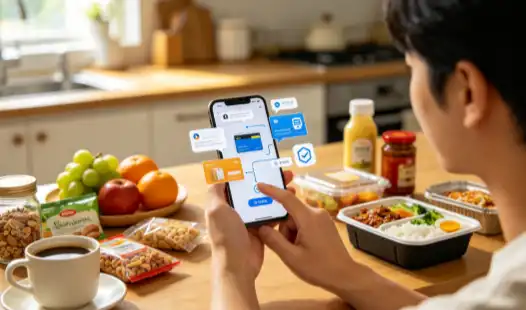
How Do WeChat Groups Drive Food Brand Growth in China's Social Commerce Market?
The WeChat Group as a High-Trust Sales Channel for Food
A WeChat group is a chat room inside China’s most popular super-app, where a brand, distributor or community leader may assemble dozens to hundreds of users for continuing discussion, product sharing, and direct sales. A WeChat group is relationship-based, not a one-way commercial. People become members because someone they know introduced them, and they remain because the organization is really delivering value, whether it’s discounts, culinary suggestions or early access to new food items.
Trust. Nothing else. Chinese customers are naturally wary of new foreign items, so a suggestion from a friend or trusted group leader inside the conversation is far more powerful than a sponsored placement on a faceless marketplace. Food is currently the third most popular category in China’s livestream and social commerce market, which benefits from a conversational, trust-driven selling environment where customers can inquire about ingredients, sourcing and taste before committing.
From Discovery to Purchase: The Group Commerce Loop
The business loop in the WeChat group is a closed loop. That may be a snapshot or short video of an imported food product posted by a group leader, say a local shop owner, a home chef who loves food, or even a paid brand rep, such as Spanish olive oil or a range of Australian snacks. Members inquire about ingredients, where they come from and how they taste. The leader responds live, occasionally providing a small taste-test snippet from their own kitchen.
Interested members purchase directly within minutes using a Mini Program, a lightweight program integrated inside WeChat that acts as the shop for the company. No download separately. Redirect to external website. The whole process, from discovery to purchase, occurs within WeChat, without ever leaving the app.
That closed-loop simplicity, along with the social evidence of seeing other group members ordering at the same time, generates a conversion environment that is impossible to achieve with typical e-commerce listings. In 2025, daily active users of Mini Programs reached 764 million and e-commerce transaction volume increased by 25 percent year-over-year. The figures speak for themselves.
Want to learn more about launching your food brand inside WeChat groups? Contact us at email info@chinaentryhub.com.
Why Are Community-Based Sales Models Becoming Essential for Food Brands Entering China?
The Trust Deficit Overseas Food Brands Face in China
In 2023, a European organic baby food manufacturer (let's call them "Nordic Harvest") tried to penetrate China by investing substantially in a flagship shop on a major e-commerce site. Six months in, they had blown over their marketing budget with abysmal conversion rates. The actual issue was trust, not product quality.
There was no reason for Chinese parents reading a faceless marketplace catalog to think that an unknown Scandinavian company understood their requirements or stood behind its safety standards. This lack of trust is something we see again and again when we deal with food businesses going into China. This is the largest hurdle you will have to overcome.
Community-based channels tackle the problem by integrating the brand in existing social interactions. When a group leader is already known and trusted by members, their endorsement of a product transfers confidence immediately and credibly. Finally, Nordic Harvest experimented with a WeChat group approach, engaging with community leaders who could sample the items on video and answer questions from parents in real time. They used a tiered WeChat group strategy and saw sales go up by 220% in 7 months. No marketplace marketing campaign has ever produced results like that.
Lower Customer Acquisition Cost Through Group Distribution
Traditional e-commerce platforms in China have become costly battlefields with rising user acquisition expenses due to intensifying competition and rising advertising charges. China social commerce has a structural advantage here: community-based group distribution may lower client acquisition expenses by as much as 35% vs paid marketplace advertising. Brands pay group leaders and community champions to create organic word-of-mouth demand, not for every click or impression on a platform. So these leaders are paid a commission on the sales they create . Their incentives are closely tied to the success of the brand .
The size of community group purchasing in China has reached 120 billion RMB, which is sufficient to show that community group buying is a popular and effective distribution channel. For international food firms with limited China marketing expenditures, this cost structure might spell the difference between a sustainable, successful market entrance or an expensive failure that consumes resources before any momentum can be built.
Want to learn more about reducing customer acquisition costs in China's food market? Contact us at +8618600291000.
China Social Commerce Channels: A New Path for Overseas Food Brands to Reach Consumers
WeChat Groups vs. Other Social Commerce Platforms
China’s social commerce scene is dominated by a few key platforms, each with its strengths. Douyin is fantastic for viral discovery via short videos and livestreaming, but, the algorithmic feed means companies have little control over who sees their content and when. (Douyin is the Chinese counterpart of TikTok). Xiaohongshu (commonly nicknamed “Rednote”) is a lifestyle community and product review platform. Good for awareness, but so much for direct, repeat purchase. WeChat groups provide a special function: they are the intimacy of a community you own with the transactional power of an embedded shop. Here is a comparison of the main differences for food brands only.
|
Feature |
WeChat Groups |
Douyin |
Xiaohongshu |
|
Primary strength |
Repeat purchases & trust |
Viral discovery |
Product research |
|
Audience control |
High (owned community) |
Low (algorithm-dependent) |
Medium |
|
Transaction loop |
Fully in-app via Mini Program |
Redirects to external stores |
Redirects to external stores |
|
Best for food brands |
Community building & loyal customers |
New product launches |
Review generation |
|
Customer retention |
Strong |
Weak |
Medium |
For food brands, the repeat-purchase dynamic is critical. Food is a consumable category. Customers who try and enjoy a product will buy again, often monthly. WeChat groups nurture this repeat behavior far more effectively than discovery-focused platforms that optimize for the next viral hit rather than long-term loyalty.
The Mini Program Storefront: Your Food Brand's Home Base
Mini Program is a mini-application inside WeChat that allows users to see goods, add to cart, checkout and pay without downloading anything or leaving the app. The Mini Program acts as a completely branded storefront for your company, one touch away from every WeChat group discussion. As soon as a group leader posts a product link, members click through and go straight on the brand’s Mini Program site, where they can read ingredient details, see sourcing stories and pay using WeChat Pay in seconds.
That seamlessness is also the reason Mini Program e-commerce transactions soared 25% in 2025. The Mini Program also allows companies to obtain first-party data on the buying behavior of group members, so they can send targeted follow-up offers and seasonal food specials without having to pay a third-party platform for access to their own consumer data. For food companies used to the data constraints of third-party markets, controlling the consumer connection changes everything.
Want to learn more about setting up a WeChat Mini Program for your food brand? Contact us at +8618600291000.
WeChat Group Marketing Strategies for Building Trust and Increasing Food Sales in China
Content That Builds Food Credibility in Groups
In a WeChat group, content should never feel like advertisement. The best food brand groups are like a digital tasting club, with the group leader sharing authentic, valuable material that really helps members make better food decisions. Consider weekly recipe ideas using the brand’s goods, behind-the-scenes movies from the place of origin or Q&A sessions where members inquire about allergies, certifications, shipping issues.
A premium Japanese rice company increased its WeChat group from 200 to 3,000 members in four months just by publishing a weekly cooking video and allowing members to submit their own dishes. Each piece of content should be answering a genuine issue or solving a real problem, not merely advertising a product. When material is very helpful, members start to see the brand as caring and high quality. Buying then comes easily.
Structured Group Funnel: From Tasting Group to VIP Food Club
China’s most successful food businesses in social commerce don’t treat all WeChat groups the same. Rather, they design a layered funnel that aligns content and offers with each member’s level of trust and commitment. At the top, a large “tasting group” of interested parties is invited to try sample-size items and learn about the brand with little risk. First-time buyers are welcomed into a mid-tier “food lover group” and are offered unique discounts, early access to new items and invites to livestream sampling sessions.
The highest tier is a tiny, curated “VIP food club” for the most active consumers, who get customized suggestions, limited-edition seasonal items and direct access to the brand’s China team. We have seen this same structure create 220% sales growth at Nordic Harvest . The tiered method turned casual browsers into repeat consumers and ultimately brand evangelists who brought their own friends into the tasting group, creating a self-sustaining development circle.
Leveraging KOCs as Group Advocates
A KOC (Key Opinion Consumer) is a normal person who has established trust within a certain group via their real product experiences, not through sponsored promotions. KOCs are relatable unlike high-profile influencers (KOLs in China). They’re fellow moms, home chefs or fitness buffs whose suggestions seem like advise from a trusted friend.
KOCs are important in the WeChat group setting because they may create organic buzz which is impossible for sponsored ads to achieve. A food manufacturer may identify the most active members of its groups and offer them free samples, asking them to provide honest evaluations in their own WeChat groups and wider social circles. Because KOCs are not compensated by the post, their material comes off as real and their followers react in kind. For foreign food companies entering China without brand awareness, getting KOCs on community-based channels is one of the quickest and most cost-effective methods to develop the social proof that drives trial sales and, eventually, loyal adoption.
Want to learn more about building a KOC strategy for your food brand in China? Contact us at +8618600291000.
Connecting Global Food Brands with China's Digital Commerce Ecosystem Through Social Selling
The End-to-End Entry Pathway for Overseas Food Brands
For those looking to enter China’s food industry via social commerce, it’s not just about creating a WeChat account and uploading pictures of your goods. The end-to-end route often starts with market research to find food categories with unmet demand and customer groups that fit the brand’s strategy. Then there’s the regulatory compliance. Import registration requirements for food goods such as labeling regulations and health certificates are quite different in China than Western markets.
Once compliance is achieved, the business puts up its WeChat Official Account, Mini Program shop, hires and educates community group leaders, and starts its first taste groups with a select group of KOC enthusiasts. The activities are ongoing, including content development, group administration, KOC seeding, and continual performance monitoring to optimize the funnel over time. China imported food worth $197 billion in 2024. The businesses who are doing it well – taking substantial share of that huge market – are the ones that can execute every stage with local expertise, cultural sensitivity and operational accuracy.
Why a Local Partner Matters
To navigate China’s digital commerce ecosystem without local knowledge is like cooking in a kitchen where all the labels are written in an unreadable language. Technically feasible yet sluggish, inefficient and hazardous. Regulatory regulations change without notice, platform algorithms change quarterly, and customer tastes change at a speed that catches unprepared companies off guard.
This is where a local partner such as China Entry Hub comes in with a multilingual staff that knows your strategic goals as well as the complex subtleties of Chinese market norms and business culture. The company runs on a 100% aligned-interest basis – it only charges customers and never takes a fee from any platform or distributor. Every advice is for your bottom line, not some middleman’s.
From compliance and platform setup to group leader recruiting and KOC administration, we provide end-to-end assistance so you can concentrate on what you do best – producing outstanding cuisine. We’ve walked dozens of food businesses through this same process. Meanwhile, the partner does the heavy lifting of orchestrating the complexity of turning WeChat groups into a dependable, scalable sales channel that multiplies over time.
Want to learn more about end-to-end market entry support for your food brand? Contact us at +8618600291000.
Conclusion
The biggest growth potential for global food manufacturers in the next decade will be China social commerce. Already, 84% of Chinese customers buy using social media, and the industry is expected to reach $1.82 trillion by 2030. WeChat groups combine trust-building, repeat-purchase, and low-cost client acquisition. Create community channels. Launch Mini Program stores. Seed KOC drives. Partner with local specialists to help you negotiate the regulatory and cultural hurdles.
The brands that move now will secure the trust relationships that define long-term success in China's food market. Can you afford to wait?
FAQ
Q: What is a WeChat group, and how is it different from a regular social media page?
A: A WeChat group is a closed chat community on the WeChat app that enables members to engage directly with each other and with a group leader. Meanwhile, a WeChat group is not a public social media site, but invite-based, which increases trust and personal involvement, making it suitable for food firms that want to establish enduring consumer relationships rather than chasing one-time hits.
Q: How long does it take for a food brand to see results from WeChat group marketing?
A: Most food companies experience beginning sales within 4-8 weeks of establishing tasting groups, with substantial and compounded growth usually arriving by month four. This tiered group funnel approach has yielded big returns. The post-implementation period saw one food brand see 220% sales increase in only seven months.
Q: Do foreign food companies need Chinese regulatory approval before selling through WeChat groups?
A: Yes. All imported food products sold in China must comply with Chinese import registration, labeling, and health certification requirements before any sales activity begins. A local partner like China Entry Hub can guide brands through the entire compliance process to ensure a smooth and legal market entry.
Ready to Enter China's Social Commerce Market?
China social commerce market is growing at 32% annually, and food ranks among its fastest-moving categories. If you are a food company executive evaluating entry strategies, the window to establish community-based sales channels is wide open today. But it will narrow as more competitors arrive. China Entry Hub provides end-to-end support, from regulatory compliance to WeChat group strategy and KOC management, with a bilingual team that ensures your brand enters China with confidence and clarity. Contact us at info@chinaentryhub.com or call +8618600291000 to schedule a consultation. Let us help you turn China's 1.2 billion WeChat users into your next generation of loyal customers.
The Import and Export Industry Committee of China Food and Pharmaceutical Industries The Quality and Safety Promotion Association is established on a nationwide industrial platform. The emphasis is on the comprehensive import-export chain of food, pharmaceuticals, cosmetics, and medical devices, offering services including policy research, mutual recognition of standards, regulatory compliance, customs clearance, brand globalization, global sourcing, cross-border settlement, and legal assistance. The Committee enables both local and foreign businesses to develop into global markets securely and effectively.
References
1. Mordor Intelligence. "China Social Commerce Market: Size, Share & Growth Analysis (2025–2030)." Mordor Intelligence, 2025.
2. Research and Markets. "China Social Commerce Market Intelligence Report 2025: Douyin and Xiaohongshu Leading the Integration of Social Interaction and Online Shopping." BusinessWire, May 2025.
3. DataReportal. "Digital 2025: China." We Are Social & Meltwater, February 2025.
4. PLTFRM Consulting. "WeChat Mini-Programs: Transforming E-commerce for Overseas Brands in China 2025." PLTFRM, 2025.
5. Statista. "Social Commerce Buyer Share by Country 2024." Statista, January 2026.
6. iiMedia Research. "2025 China Retail Industry Market Consumer Behavior Survey." iiMedia Consulting, May 2025.

Sonia
8+ years in financial engineering & legal advisory;Compliance & Execution Dept;Due diligence & partnership structuring;Operational Risk Controller
Get a Direct Response from Our China Expertise.
he challenge you're facing is one we've already solved. Leverage our proven framework to receive your custom China blueprint.
Recommended Blog



Find Distributor in China: Due Diligence & Background Check Guide





Streamline Your China Audit: From Records to Report in 2026