How Live Shopping Drives China Social Commerce for Consumer Goods
Why Everyday Products Sell Through a Camera Lens and a Live Comment Box
- Why Everyday Products Sell Through a Camera Lens and a Live Comment Box
- Three Psychological Triggers That Explain Live Shopping’s Pull
- From Live Stream to Lifetime Customer: What Foreign Consumer Brands Need to Do
- Compliance and Channel Design: The Foundation Every Brand Must Build
- Conclusion
- FAQ
- Start Your Live Shopping Journey with China Entry Hub
- References
Compiled by: The Import-Export Committee of the China Food and Pharmaceutical Enterprises Quality and Safety Promotion Association
http://www.chinaentryhub.com
The image is familiar to anyone who’s seen a television shopping channel. A host holds a product up to the camera, talks fast and repeats the discounted price many times. But in China, it’s a brighter, playful experience and it’s much more engaging. The viewers do not call a toll-free number. They put queries into a live comment box, see the host answer immediately, then push a button to pay while the stream is still on. This is live shopping and it has become one of the most powerful engines inside China social commerce. Live buying transforms a routine consumer good into a collective experience. It’s fun, quick approval, social evidence, all in one that a static product page just can’t provide. This article takes a look at the behaviour that drives the transition, the psychological triggers that make it work, the operational processes for international companies, and the compliance guardrails that need to be in place beforehand.
Why Everyday Products Sell Through a Camera Lens and a Live Comment Box
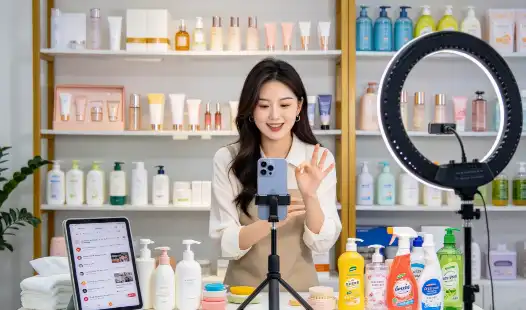
China social commerce no longer is about a friend sharing a link or an individual reading through a feed. “Live shopping has formed a public stage where thousands of buyers watch the same host at the same time. Consumer goods gain the most of any category because the products are easier to visually convey. A hand can be moistened with a moisturiser, a snack can be unwrapped and sampled, a cushion can be crushed on camera. The live format trades uncertainty for concrete evidence. The host’s facial expression, the texture of the product, and the replies in the comment box answer the questions that generally prevent a shopper from buying. So firms who once dismissed live shopping as a novelty now have a line item in their budget for it.
The Shift from Search-Based Buying to Experience-Based Discovery
Traditional e-commerce asks a consumer to know what they want, type a keyword, and evaluate a shelf of similar products. Live shopping reverses that. It introduces a product while the consumer is in a relaxed, entertainment-seeking mood. China social commerce therefore creates demand instead of merely capturing it. A woman watching a late-night streaming session may not have planned to buy a new vegetable chopper. But the host’s demonstration of a quick meal, combined with a limited-time offer, creates a need she did not recognize minutes earlier. Consumer goods with a visible problem-solving element respond especially well to this type of discovery.
Why Consumer Goods Are the Natural Hero of the Live Format
Consumer goods have an advantage over services or complex machinery: they can be fully demonstrated within a short attention span. A snack has crunch; a face cream has a smell and absorbency; a kitchen gadget has a before-and-after result. Live shopping gives these qualities a real-time stage. Viewers do not need to imagine how the product works because they can watch the host use it. For a foreign consumer goods brand, the live room also becomes a place to explain origin, ingredients, and usage in simple terms. These demonstrations matter because the Chinese buyer is making a low-risk trial decision. Once the product meets expectations, the relationship can continue through repeat orders.
Interaction Becomes a Form of Entertainment and Trust
The comment box is not a side feature, it’s the heart of live shopping. Viewers witness other people enquiring about delivery time or skin sensitivity and they think the product is being evaluated in public. This transparency is the foundation of China’s social commerce. When a host handles an awkward question with grace, it’s more creditable to them than a pre-recorded promo. For consumer items, this open Q&A addresses the very things that would usually cause buyer uncertainty — including sizing, shelf life or if a shade looks different in real life. Post-live, the presenter and the brand form a duo that sticks with the public for the next launch.
Want to know whether your consumer goods category is ready for live shopping? Contact our specialists at info@chinaentryhub.com or call +8618600291000 to receive an initial fit assessment.
Three Psychological Triggers That Explain Live Shopping’s Pull
Technology can’t explain the success of China social commerce alone. It operates by triggering deeply embedded purchase instincts. Live shopping marries the need to move fast with social bonding, two things that might encourage people to do something. Consumer goods purchases are regular and low risk and fill exactly the emotional space. When shoppers see a flash sale that is only available for a limited period, the restricted time and limited product create an urgency that seems thrilling, not threatening. If the product is a typical household item, the risk of making a poor decision is modest enough to permit the impulse purchase.
The Fear of Missing Out Fuels Collective Action
A live room with thousands of viewers creates a sense that many people are making the same decision. This is comfortable. In China social commerce, the comment box can display a message every time someone places an order. That visible stream of purchases acts as real-time social proof. Consumer goods buyers see that a particular tea or a set of storage boxes is popular among other customers like them. The fear of missing the special price pushes the audience to act before the countdown ends. The buyer is not simply purchasing an item; they are joining a group moment.
Parasocial Connection Makes the Host Feel Like a Trusted Friend
The most successful live shopping hosts speak directly to the camera, use the viewer’s language, and appear warm and funny. Over time, the audience forms a parasocial bond with the host. This relationship transfers trust to the product. When the host says a towel remains soft after washing, the viewer believes it because they believe in the host. China social commerce creates a distance-free conversation where recommendations feel personal. For consumer goods, this means the product is bought through a relationship, not only through a sales pitch. The brand should support the host by providing accurate product information and honest answers for the chat.
Entertainment Value Lowers the Barrier to Trying New Brands
A great live show is not only about selling a product but also giving the audience a cause to remain. The increased attention span is a boon for consumer goods businesses that can then explain in more detail what makes the product different. The host may compare two forms of the same snack, talk about the findings of a cleaning product test or illustrate how a little appliance might be useful in a hectic family life. While entertaining the audience they learn and the following purchasing decision is easy. And that ability to teach without boring people is one reason live shopping has changed the game of China social commerce for daily things.
If you want to identify a host whose audience matches your product profile, email our team at info@chinaentryhub.com or call +8618600291000 for a list of pre-screened live-streaming partners.
From Live Stream to Lifetime Customer: What Foreign Consumer Brands Need to Do
China social commerce rewards brands that see a live stream as the beginning of a relationship. The host can open 10,000 doors, but the brand must keep the visitors happy after the sale. Consumer goods are repeat purchases, so the strategy must focus on the post-live experience. That means preparing enough stock, ensuring fast delivery, and sending an appealing package that encourages sharing. A delightful unboxing moment often becomes user-generated content. Buyers post photos in their own social circles, and those photos drive the next wave of interest. The product experience, not the flashy stream, builds the long-term reputation.
Choose a Product that Creates a Satisfying On-Camera Moment
Not every consumer product deserves a live stream. The best candidates have a clear visual effect, a strong sensory appeal, or a surprising convenience. For example, a wiper that cleans a glass pane without streaks is ideal because the host can demonstrate the difference on camera. A skincare essence that leaves a quick finish also performs well. If your product is hard to explain in ten seconds, launch a video series first. Then use live shopping after the audience understands the product’s basic purpose.
Plan Inventory and Logistics with Dramatic Peaks in Mind
A successful live stream can produce a sales spike that is ten times higher than normal daily orders. Consumer goods brands need a logistics plan that handles this spike without delaying shipment. Products must be pre-packed and labeled before the broadcast starts. If your brand uses a third-party warehouse, confirm the warehouse has enough staff to handle the same-day orders. Late delivery is the fastest way to turn a happy new buyer into a negative reviewer. In China social commerce, word travels quickly. Plan the supply chain with the same care that goes into the broadcast script.
Measure Repeat Purchase Rather Than Single-Event Revenue
Live shopping may look like a transaction event, but the real value is in the customer files. A first order from a live stream should not be treated as a one-time win. Send a follow-up message, invite the buyer to a membership group or a mini-program, and inform them about the next live session. Consumer goods brands can track how many viewers become repeat customers within thirty days. If the repeat rate is high, the live strategy is working. If it is low, the product might be overpromised or misunderstood. The live room helps you learn where the gaps are.
Pause for a moment and think about your product’s last ten sales. How many of those customers would reorder after watching a live demonstration? If the answer is unclear, a small pilot can give you that data without a large advertising budget.
Compliance and Channel Design: The Foundation Every Brand Must Build
No amount of live shopping excitement can remove the need for regulatory compliance. China social commerce is still a commercial channel, and consumer goods sold into China must meet local labeling, safety, and import rules. Cosmetics need registration or filing, certain food packaging needs a standardized Chinese label, and household electrical goods must have the right certification. A live host cannot say that a sunscreen prevents disease or that a baby bottle is “medical grade” unless the official documentation supports that statement. Foreign brands should finish their compliance review before contacting a streamer.
Know the Label and Ingredients Rules by Product Category
Consumer goods are not one giant category. A new skincare cream follows a different compliance path than a fabric cleaner or a small kitchen appliance. For imported cosmetics, China requires a product information file and often a safety assessment before sales. Food and food supplements are also clearly regulated. The product’s Chinese label must show the correct importer name and a transparent ingredient list. Do not assume that a first live stream can work with an English-only label. Use a professional consultant to verify each SKU to avoid a sudden removal from the platform.
Work with Platform-Approved Channels and Transparent Partners
A live stream can happen on multiple platforms. Douyin and Taobao Live are the largest, but each has its own store-opening requirements. Some products can be sold through cross-border e-commerce, while others must be imported into a bonded warehouse. China social commerce includes both paths, but the route must be chosen early. When a host performs a livestream, the product link has to be attached to a compliant store. A partner who understands the platform policies will protect the brand from unexpected store closures.
Build a Strategy That Does Not Rely on a Single Host or a Single Event
Many foreign brands make the mistake of investing all their effort in one famous streamer. If the streamer changes their pricing or the product fails to deliver, the brand is left with no channel. The more reliable approach is to build a matrix: a couple of established hosts plus a group of small niche streamers who speak to specific communities. Each host can tell a slightly different story about how your consumer goods fit into a lifestyle. China social commerce then becomes a layered system rather than a bet on one loud event.
Before your first campaign, get the compliance foundation right. Contact our specialists at info@chinaentryhub.com to review your product classification and label readiness step by step.
Conclusion
Live shopping has transformed China social commerce from a place where people buy through chats into a stage where consumer goods are experienced, discussed, and purchased in real time. The excitement of the broadcast attracts attention, but the product experience decides whether a brand survives. Foreign brands must prepare compliant labels, build an agile supply chain, and select partners whose audiences match the product. Live shopping is not a shortcut. It is a better way to show an honest product to a crowd that is already ready to trust the person in front of the camera.
FAQ
1.Can a small consumer goods brand start with live shopping without a big budget?
Yes. Start with a narrow audience and a micro-influencer who will honestly test the product. A small but engaged live room often produces higher conversion than a huge broadcast with little connection. Spend your budget on free samples, compliance work, and clear product videos before looking for celebrity hosts.
2.Which consumer goods categories perform best in live shopping?
Products with visible texture, an obvious before-and-after effect, or an interesting use demonstration are the strongest. Popular examples include snacks, herbal teas, kitchen tools, home cleaning products, and skincare items. Commodities that require no explanation may still sell, but they do not benefit from the live format as much.
3.How do I know whether my product label is ready for a Chinese live stream?
A label is ready when it contains a Chinese product name, the full ingredient list, net weight, importer information, storage instructions, and any relevant certification number. If the product is a cosmetic or food item, ask a compliance advisor to compare the label with the registered filing. A label approved for your home market is not automatically compliant in China.
Start Your Live Shopping Journey with China Entry Hub
You now have a clear picture of why live shopping is a powerful engine inside China social commerce. To turn that knowledge into orders, you need a local partner who understands the channel and the regulations. China Entry Hub connects foreign consumer goods brands with pre-screened live-stream partners, warehousing solutions, and compliance experts. Our direct fee model means we work for you, not for hidden commissions. Take the next step today: email info@chinaentryhub.com or call +8618600291000. Tell us what you sell, and we will help you find a live shopping format that fits your brand. The camera is waiting, and the audience is ready.
The China Import and Export Industry Committee Pharmaceutical and Food Industries The Quality and Safety Promotion Association is founded on a national-level industry platform. It concentrates on the entire import-export chain of food, pharmaceuticals, cosmetics, and medical devices, offering services such as policy research, standards mutual recognition, regulatory compliance and customs clearance, brand globalisation, global sourcing, cross-border settlement, and legal support. Both domestic and international enterprises are enabled by the Committee to expand into global markets in a safe and efficient manner.
References
1. Chen, L., & Wang, Y. (2020). A study on the influencing factors of consumers' purchase intention in e-commerce live streaming. Journal of Electronic Commerce in Organizations, 18(4), 57–73.
2. Hu, M., & Chaudhry, S. S. (2020). Enhancing consumer engagement in e-commerce live streaming via relational bonds. Internet Research, 30(3), 1019–1041.
3. Liu, C., Bao, Z., & Zheng, C. (2019). Exploring consumer purchase intention in social commerce: A model based on trust and social presence. Journal of Theoretical and Applied Electronic Commerce Research, 14(1), 133–153.
4. Wongkitrungrueng, A., & Assarut, N. (2020). The role of live streaming in building consumer trust and engagement with social commerce sellers. Journal of Business Research, 117, 543–556.
5. Xiang, L., Zheng, X., Lee, M. K. O., & Zhao, D. (2016). Exploring consumers' impulse buying behavior on social commerce platform: The role of parasocial interaction. International Journal of Information Management, 36(3), 359–367.
6. Zhang, M., Qin, F., Wang, G. A., & Luo, C. (2020). The impact of live video streaming on online purchase intention. Electronic Commerce Research, 20(3), 487–511.

Chloe
15+ years in state-owned enterprise & consumer goods operation;Channel Development Dept;High-end private network building & premium community management
Get a Direct Response from Our China Expertise.
he challenge you're facing is one we've already solved. Leverage our proven framework to receive your custom China blueprint.