What Makes China Social Commerce Group Buying Work for Food
The Anatomy of China's Social Commerce Boom in Food Retail
- The Anatomy of China's Social Commerce Boom in Food Retail
- How Group Buying Models Actually Operate
- Why Food Products Thrive in This Channel
- Challenges Foreign Food Brands Face Entering This Ecosystem
- Building a Sustainable Strategy for Long-Term Success
- Conclusion
- FAQ
- Partner with China Entry Hub to Enter China's Food Group Buying Market
- References
Compiled by: The Import-Export Committee of the China Food and Pharmaceutical Enterprises Quality and Safety Promotion Association
http://www.chinaentryhub.com
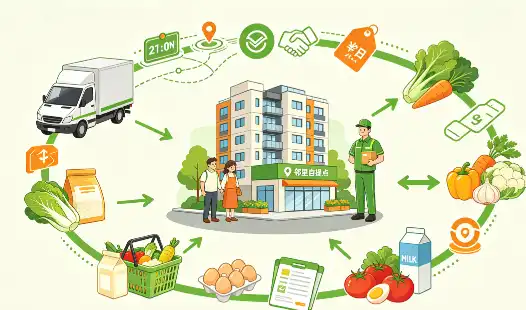
Over the last several years a whole new channel has changed the food retail scene in China: social commerce based on group purchasing. This strategy unites neighbours, community leaders and platforms into a single closed loop that transports fresh produce, packaged snacks and everyday foods at scale, unlike conventional shopfronts or even ordinary e-commerce marketplaces. Understanding what makes China social commerce group buying work for food requires looking beyond simple price discounts to the trust structures, logistics choreography, and consumer habits that hold the entire system together. For multinational food firms looking to enter the Chinese market, this channel offers a major potential as well as a really separate set of laws to master before investing resources.
The Anatomy of China's Social Commerce Boom in Food Retail
China social commerce did not emerge overnight; it grew out of a broader shift in how consumers discover and trust products online. Rather of looking for stuff on open markets, a lot of customers increasingly follow suggestions shared via private networks, such WeChat groups and mini-programs, with a friendly community leader picking daily deals. Groceries are consumed on a regular basis and significantly benefit from bulk prices, so group purchasing became the most apparent manifestation of this trend in food retail. Food as a category is right at the heart of this surge because it mixes urgency, repetition and price sensitivity in a manner that few other categories do. The end game is a layered ecology in which platforms, local organisers and suppliers all rely on each other to keep fresh items flowing effectively from farm or factory to doorstep.
From Community WeChat Groups to National Platforms
What started as casual WeChat discussions organised by a single person eager to arrange mass buys has morphed into formalised national groups, complete with its own apps, standardised pickup places, and legal contracts with suppliers. But the informal origins still key because they create the assumption that there is a genuine, known person behind every group order, not a nameless shopfront.
Why Food Became the Anchor Category
Food is the anchor for this paradigm since it is always replaced, clothing or gadgets are not. Grocery and food goods dominate group purchasing catalogues in most Chinese cities today, since fresh fruit, meat, dairy and pantry staples constitute the repeating purchase cycles that keep community leaders engaged and platforms lucrative.
The Role of Trust-Based Networks
Trust is the currency of this entire system. Consumers buy food largely on the strength of a community leader's reputation and a platform's track record, not on brand advertising alone, which is why access to these invitation-only, closed networks is something outside brands cannot simply purchase their way into.
Platform Players Shaping the Space
A handful of major platforms, spanning dedicated grocery apps, instant-delivery giants, and mini-program based operators, have consolidated much of the market, each competing on freshness, delivery windows, and price, while smaller regional players continue serving lower-tier cities where national coverage remains thinner.
To understand how China social commerce group buying channels can be mapped for your specific food category, contact our specialists at +8618600291000 to discuss your market entry strategy.
How Group Buying Models Actually Operate
Beneath the surface, group buying for food follows a fairly consistent operating rhythm regardless of which platform is involved. A community leader, sometimes called a tuanzhang, posts a curated list of discounted items to a local group. Neighbors place orders directly through a mini-program before a set cutoff, usually the evening before. Once the order window closes, the platform aggregates demand across many communities and places a single consolidated purchase order with the supplier, which keeps costs down and reduces waste. Food items move through this pipeline especially well because the pre-sale structure matches supply almost exactly to confirmed demand, something traditional retail struggles to achieve. This operational discipline is a major reason China social commerce group buying continues to outperform conventional grocery channels on both price and freshness.
The Community Leader (Tuanzhang) System
The community leader is the connective tissue of the entire model, responsible for promoting the daily list, answering questions, and often storing goods temporarily until pickup. Their local credibility directly determines how much volume a supplier can expect to move through any given neighborhood.
Pre-Order and Next-Day Pickup Logistics
Orders placed one evening are typically fulfilled the next day, with bulk shipments delivered to a single pickup point rather than to individual doorsteps. This consolidation trims last-mile costs dramatically compared with door-to-door delivery models used elsewhere.
Price Discovery Through Collective Demand
Because orders are aggregated before purchasing from suppliers, platforms can negotiate wholesale-level pricing that individual shoppers could never access on their own, turning collective demand into a genuine pricing advantage rather than a marketing gimmick.
Payment and Settlement Flow
Payments are typically processed instantly through mobile wallets at the moment of ordering, and platforms settle with suppliers on short cycles, often within a week, considerably faster than the payment terms found in traditional retail relationships.
If you want to see how group buying settlement and logistics flows would apply to your product line, reach out to our team at +8618600291000 for a tailored breakdown.
Why Food Products Thrive in This Channel
Food is uniquely suited to group buying because it satisfies nearly every condition the model rewards: frequent repurchase, price sensitivity, and a genuine need for freshness that rewards fast, localized logistics. Chinese consumers, particularly in lower-tier cities, have shown strong willingness to plan meals around next-day pickup windows in exchange for meaningfully lower prices on produce, meat, and pantry goods. Group buying also plays into an existing cultural comfort with bulk purchasing and communal decision-making, both of which reinforce loyalty to a particular community leader or platform over time. For international food brands, this creates an unusual opening: a channel where product trial can be driven by community trust and price rather than by expensive advertising campaigns alone.
Perishability Meets Predictable Demand
Because orders are confirmed before suppliers ship, perishable food inventory can be planned with far greater precision, dramatically cutting the spoilage rates that typically plague fresh food retail in fast-growing urban markets.
Regional Sourcing and Freshness Appeal
Many group buying platforms lean into regional and seasonal sourcing stories, positioning produce as coming straight from a named farm or region, which resonates strongly with consumers who associate shorter supply chains with better freshness and value.
Price Sensitivity Among Urban Consumers
Households in second- and third-tier cities remain highly price-conscious, and group buying's ability to shave a meaningful percentage off everyday grocery bills keeps this channel relevant even as disposable incomes rise across the country.
Repeat Purchase and Habit Formation
Daily or near-daily ordering habits form quickly once a household experiences reliable next-day pickup, turning what starts as a one-time discount purchase into a recurring routine that platforms can build long-term retention around.
To be sure the opportunity is matched with the right execution, it helps to look at where most foreign food brands actually struggle once they attempt to enter this ecosystem on their own.
For guidance on positioning a food product for maximum appeal within China's group buying channels, contact info@chinaentryhub.com or +8618600291000 today.
Challenges Foreign Food Brands Face Entering This Ecosystem
Despite the appeal, group buying is not a simple channel for outside brands to plug into. Import compliance requirements for food products in China are strict and category-specific, covering everything from labeling to safety certification, and missing a single requirement can stall an entire shipment. Cold chain logistics add another layer of complexity, since fresh and chilled goods must maintain consistent temperatures across consolidation points and community pickup locations that were never designed with international suppliers in mind. Perhaps most importantly, the invitation-only nature of many social commerce networks means outside brands cannot simply buy their way in the way they might purchase shelf space in a Western supermarket; access depends on relationships that take time and local credibility to build.
Regulatory and Import Compliance Hurdles
Every food category entering China carries its own registration, labeling, and inspection requirements, and group buying platforms will not list products that fail to clear these steps, making compliance the first real gate a foreign brand must pass through.
Cold Chain and Distribution Complexity
Maintaining freshness across a network of community pickup points requires logistics partners who understand both national cold chain standards and the specific rhythms of next-day, community-based delivery, which differs meaningfully from standard warehouse-to-store distribution.
Building Trust Without Existing Local Networks
Without an established reputation among community leaders, a new brand's products are unlikely to be selected for daily lists, regardless of quality, since trust in this channel is earned locally rather than granted through marketing spend.
Selecting the Right Platform Partners
Not every group buying platform suits every food category, and choosing the wrong partner can mean poor placement, weak volume, or mismatched consumer expectations, so careful platform selection matters as much as the product itself.
China Entry Hub can help you navigate compliance assessments and platform selection before you commit resources. Contact +8618600291000 to get started.
Building a Sustainable Strategy for Long-Term Success
Succeeding in China's group buying space over the long run requires more than a single successful shipment; it requires a coherent strategy that connects compliance, logistics, and channel partnerships. Brands that treat their first entry into China social commerce as a controlled test, backed by pre-screened local partners in legal, procurement, and logistics, tend to adapt faster than those attempting to manage every relationship independently from abroad. Group buying for food should also be viewed as one part of a wider channel strategy rather than a standalone bet, since sustainable growth typically comes from combining group buying's trial-driving power with broader distribution across mainstream e-commerce platforms over time.
Partnering with Pre-Screened Local Experts
Working with vetted local partners across legal, procurement, logistics, and human resources removes much of the guesswork from entering group buying channels, replacing trial-and-error with tested relationships already familiar with the food category.
Aligning Market Entry with Compliance Assessment
A proper compliance assessment early in the process prevents costly delays later, ensuring that labeling, certification, and import documentation are settled before a product ever reaches a community leader's daily list.
Integrating Group Buying into a Broader Channel Mix
Group buying works best as a trial and awareness driver that feeds into wider e-commerce and distributor relationships, rather than as the sole channel a brand relies on for long-term revenue.
Measuring Success Beyond Initial Sales
Tracking repeat purchase rates, community leader retention, and regional expansion gives a far clearer picture of whether a food product is genuinely succeeding in this channel than first-week sales figures alone.
Ready to build a sustainable China market entry strategy for your food brand? Contact our specialists at +8618600291000 to discuss your options.
Conclusion
What makes China social commerce group buying work for food ultimately comes down to trust, logistics precision, and a genuine fit between the category and the channel. Group buying rewards brands that understand community-based decision-making, next-day fulfillment, and the compliance realities of selling food in China, rather than those simply chasing lower prices. For international food companies, success in this space depends less on marketing budget and more on finding the right local partners to navigate compliance, logistics, and platform selection. With the right guidance, this channel can become a genuine growth engine rather than an unfamiliar obstacle.
FAQ
1. What is China social commerce group buying?
It is a model where consumers place pre-orders through community leaders on social platforms, and confirmed demand is aggregated before bulk purchasing from suppliers, typically for next-day pickup.
2. Why does food perform so well in group buying channels?
Food is purchased frequently, benefits from pre-sale demand matching, and rewards the freshness and price advantages that group buying's logistics model naturally creates.
3. What is the biggest challenge for foreign food brands entering this channel?
Building trust within invitation-only networks and meeting China's strict food import and compliance requirements are typically the two largest hurdles.
Partner with China Entry Hub to Enter China's Food Group Buying Market
Entering China's China social commerce and group buying channels for food takes more than a good product; it requires the right local partners, a clear compliance roadmap, and access to trusted networks that cannot be built through advertising alone. China Entry Hub connects foreign food brands with pre-screened partners in compliance, logistics, procurement, and distribution, turning an unfamiliar market into a manageable one. Our interests are fully aligned with yours, and we provide end-to-end support from initial assessment through market launch. If you are ready to explore what group buying could mean for your food brand, contact us today at info@chinaentryhub.com.
Import-Export Industry Committee of China Pharmaceutical and food companies A nationwide industrial platform underpins Quality and Safety Promotion Association. It offers policy research, standards mutual recognition, regulatory compliance and customs clearance, brand globalisation, global sourcing, cross-border settlement, and legal support for the entire food, pharmaceutical, cosmetic, and medical device import-export chain. The Committee helps local and multinational companies join global markets securely and effectively.
References
1. Chen, L., & Wang, Y. (2023). Community Group Buying and the Reshaping of China's Fresh Food Supply Chains. Journal of Retailing and Consumer Services.
2. Daxue Consulting. (2026). China Consumer Market Trends Report: Social Commerce and Group Buying.
3. EqualOcean Research. (2021). Community Group Buying: China's Internet Giants' New Battlefield.
4. China Skinny. (2021). The Rise of Community Group Buying in China.
5. Bonafide Research. (2026). China Online Grocery Market Overview, 2031.
6. QuestMobile. (2020). Fresh Food Mini-Program Industry User Behavior Report.

Grace
12+ years in cross-border logistics & supply chain management;Logistics Engineering major;Operations & Fulfillment Dept;End-to-end supply chain solutions & customs clearance
Get a Direct Response from Our China Expertise.
he challenge you're facing is one we've already solved. Leverage our proven framework to receive your custom China blueprint.
Recommended Blog

Top Translation Services for Seamless Communication in China


Cut China Logistics Costs by 20%: Optimization Strategies You Should Know

The Unspoken Rules of Chinese Business Culture

How to Build Pharma Channel Sales in China with Distributors


Get Direct Shelf Access in China's Exclusive Sales Channels

How to Choose a Reliable NMPA Registration Agent for China Market Entry